2024 - Present
M.S. in Software Engineering
Research direction: Intelligent Software Engineering - API Recommendation.
Intelligent Software Engineering - API Recommendation - LLM-assisted Developer Tools
Member of the PRiSE Research Group, Anhui Polytechnic University
My research direction is Intelligent Software Engineering - API Recommendation. I study how novice programmers express incomplete software-development intents and how intelligent systems can recover those intents to provide reliable API recommendations.
Research Focus
I focus on API recommendation in intelligent software engineering, especially the gap between vague natural-language programming needs and reliable API-level development support.
Academic Training
2024 - Present
Research direction: Intelligent Software Engineering - API Recommendation.
2020 - 2024
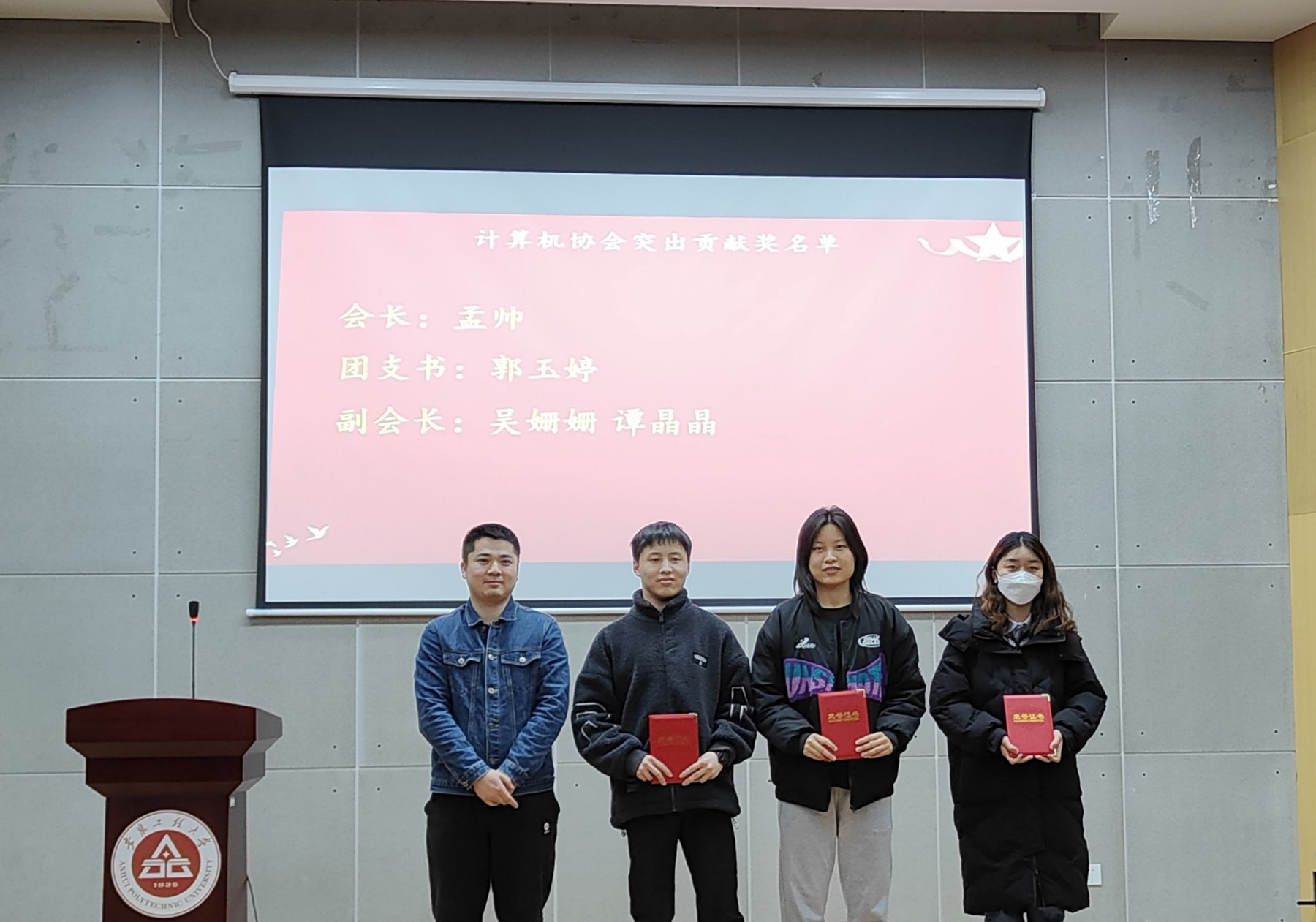
Served as president of the Computer Association and participated in programming contests, volunteer service, and student technology activities.
Publications and Manuscripts
My work explores three complementary directions in API recommendation: I/O-example-driven intent clarification, retrieval-guided multi-path consensus aggregation, and learning from heterogeneous information.
Second author and corresponding author
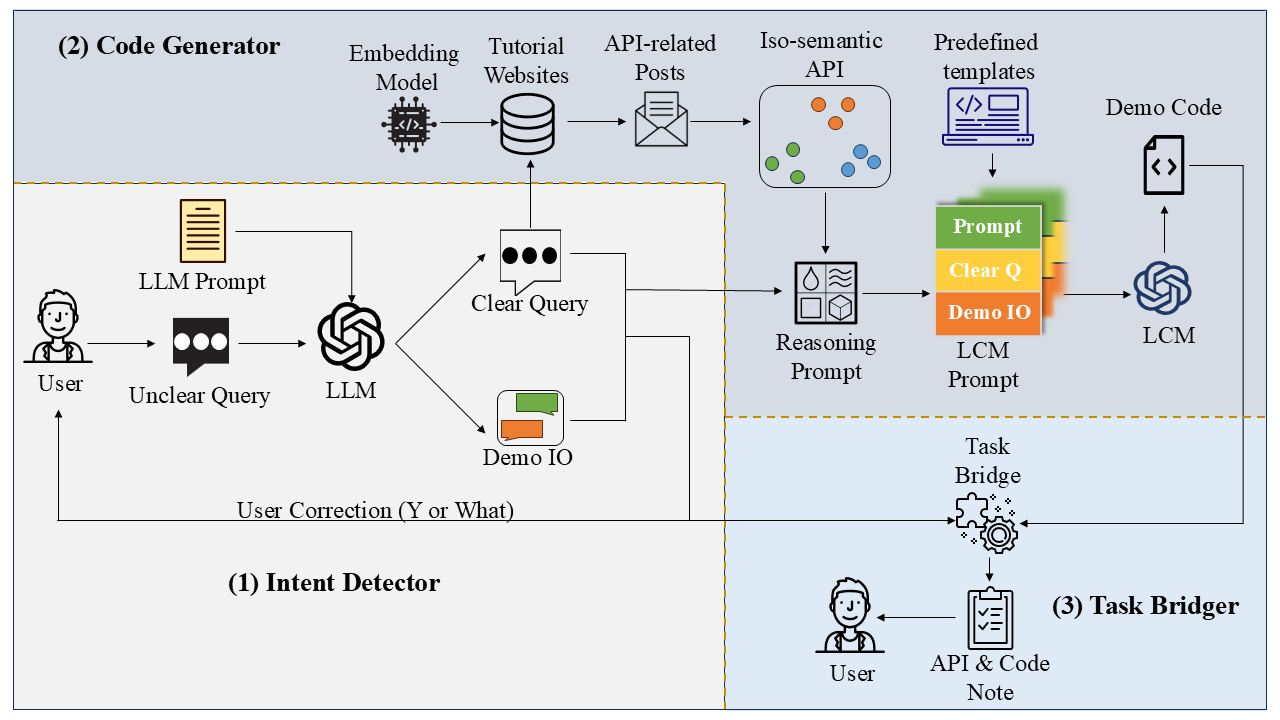
IOCAPI clarifies programming intent through user-confirmed I/O examples. Its Intent Detector, Code Generator, and Task Bridger connect LLM-based clarification with code-model generation to deliver API recommendations and interpretable code examples. Evaluation combines three datasets with a user study covering seven programming tasks.
First author
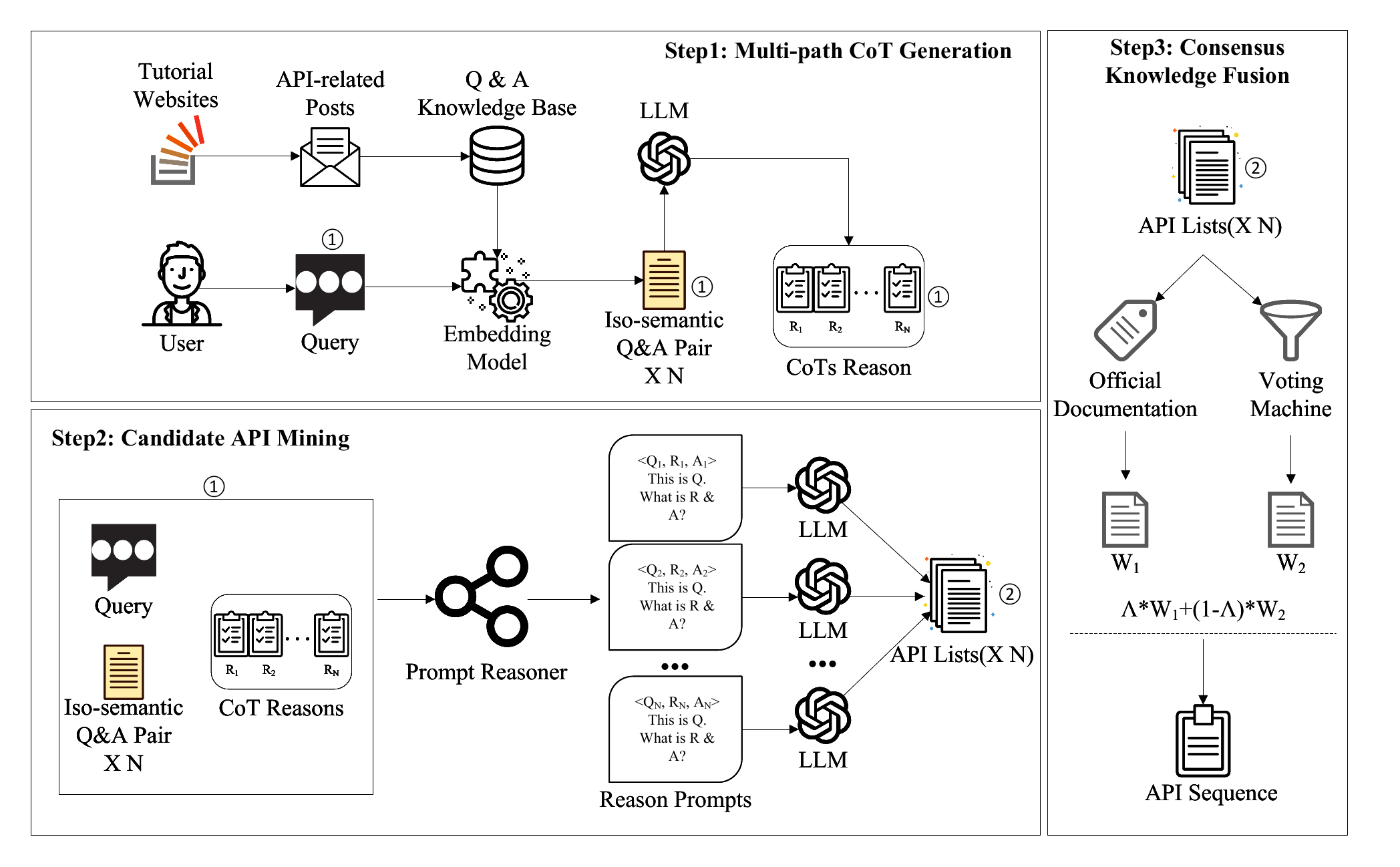
CoLAR retrieves related Q&A examples to guide multiple reasoning paths, then ranks catalog-resolved API candidates using cross-path recurrence and query–documentation similarity. Consensus is an inference-time ranking signal, with no additional consensus model trained. Evaluation covers BIKER-Dataset, APIBENCH-Q, and ReSO-GitBench; gains vary by dataset and metric, and agreement does not guarantee correctness.
Second author and corresponding author
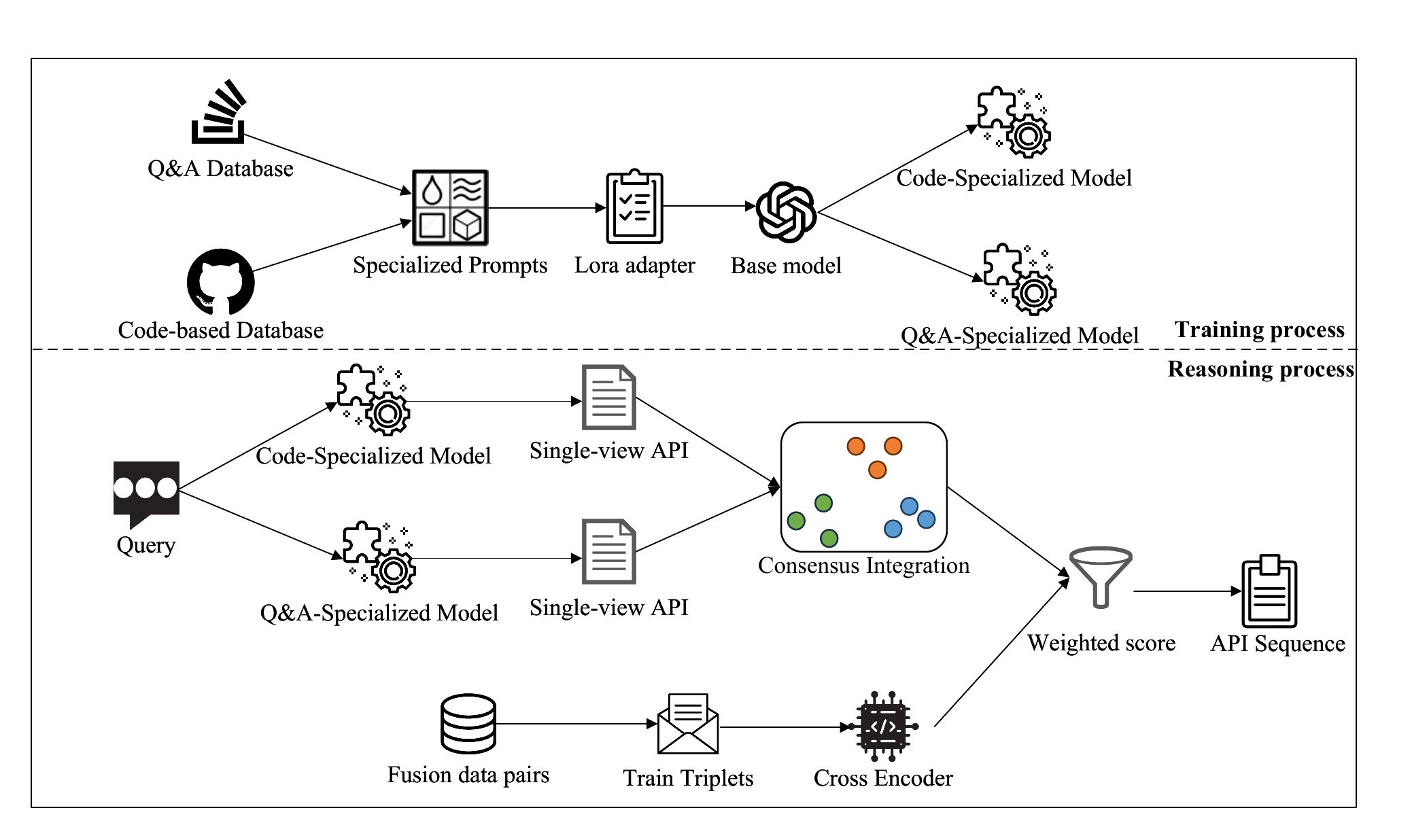
CoHAPI trains source-specialized recommendation branches on Stack Overflow Q&A and GitHub code comments. It combines rank-fusion consensus with a contrastive-learning semantic validator to rerank Java API candidates for incomplete natural-language queries. Evaluation on two public benchmarks examines the value of these complementary information sources.
Engineering Practice
The project section emphasizes implementation depth, system responsibility, and how engineering practice supports long-term software-engineering research.
Research-driven product prototype - 2026 - Present
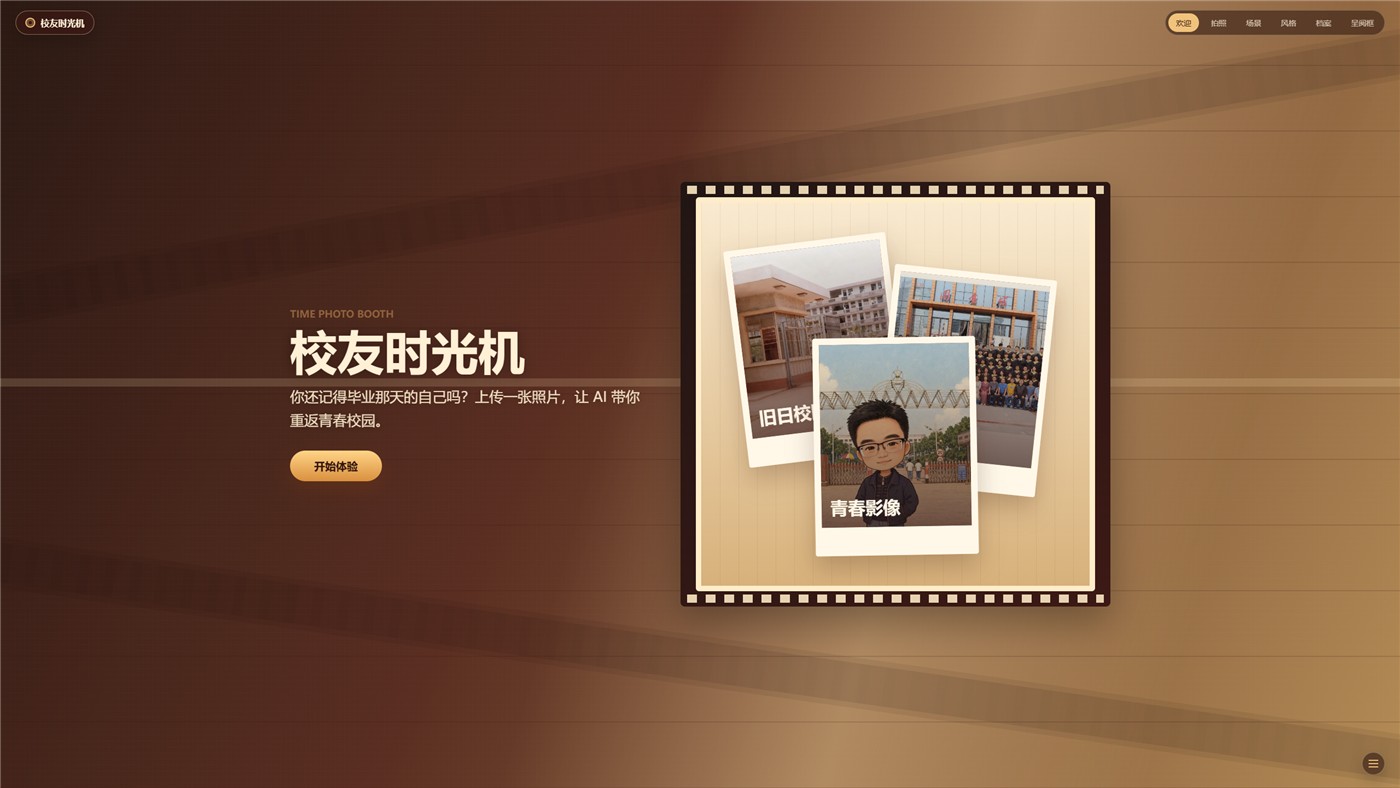
An AI-powered alumni service project for university history museums, alumni centers, anniversaries, and graduation scenarios. The system explores youthful portrait generation, campus-scene fusion, historical group-photo retrieval, and personalized commemorative content generation.
Role: Served as project lead, responsible for product planning, system architecture, core feature development, and team coordination from idea validation to prototype delivery.
Outcome: Built an experience-oriented prototype with public-facing project materials and a demonstrable system flow.
Industry internship project - May 2025 - Nov 2025
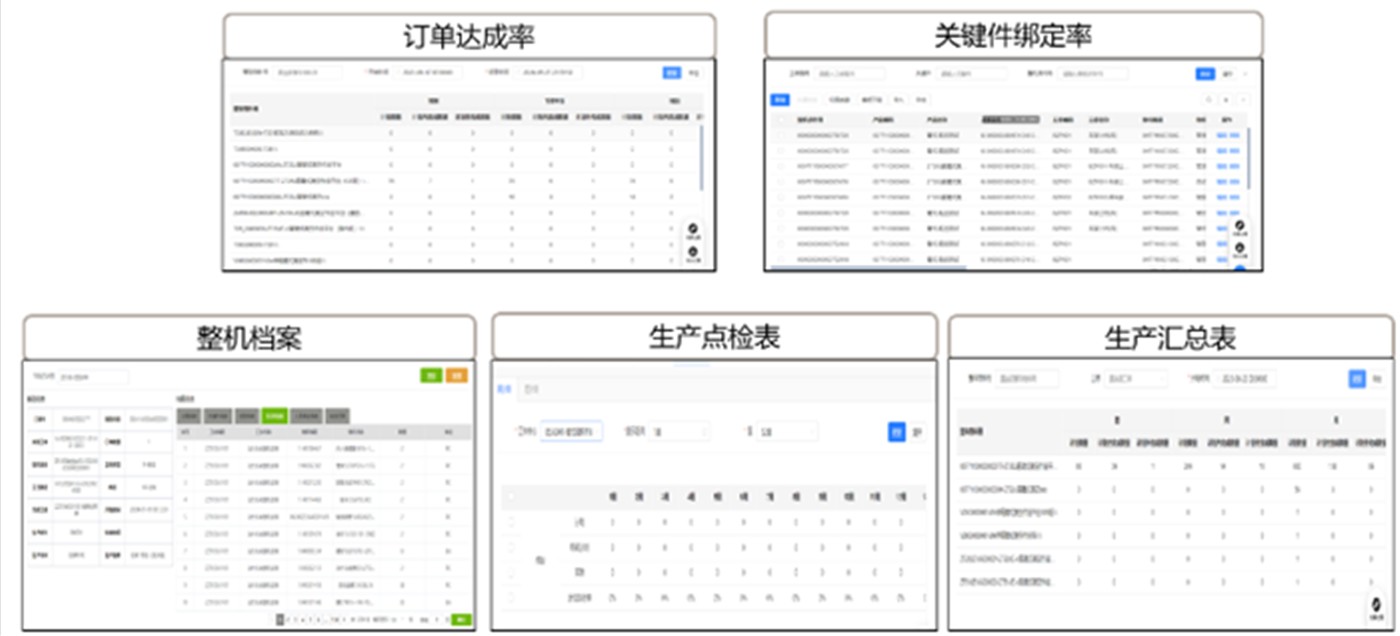
A warehouse management system for Anhui Meirui'er Filter Co., Ltd., covering inventory management, inbound and outbound workflows, batch tracking, stock alerts, and operational dashboards.
Role: Participated as a core developer, designing and implementing key business modules on both backend microservices and frontend visualization pages.
Outcome: Supported high-frequency daily material-flow operations and improved the digital management capability of warehouse workflows.
Leadership and Community
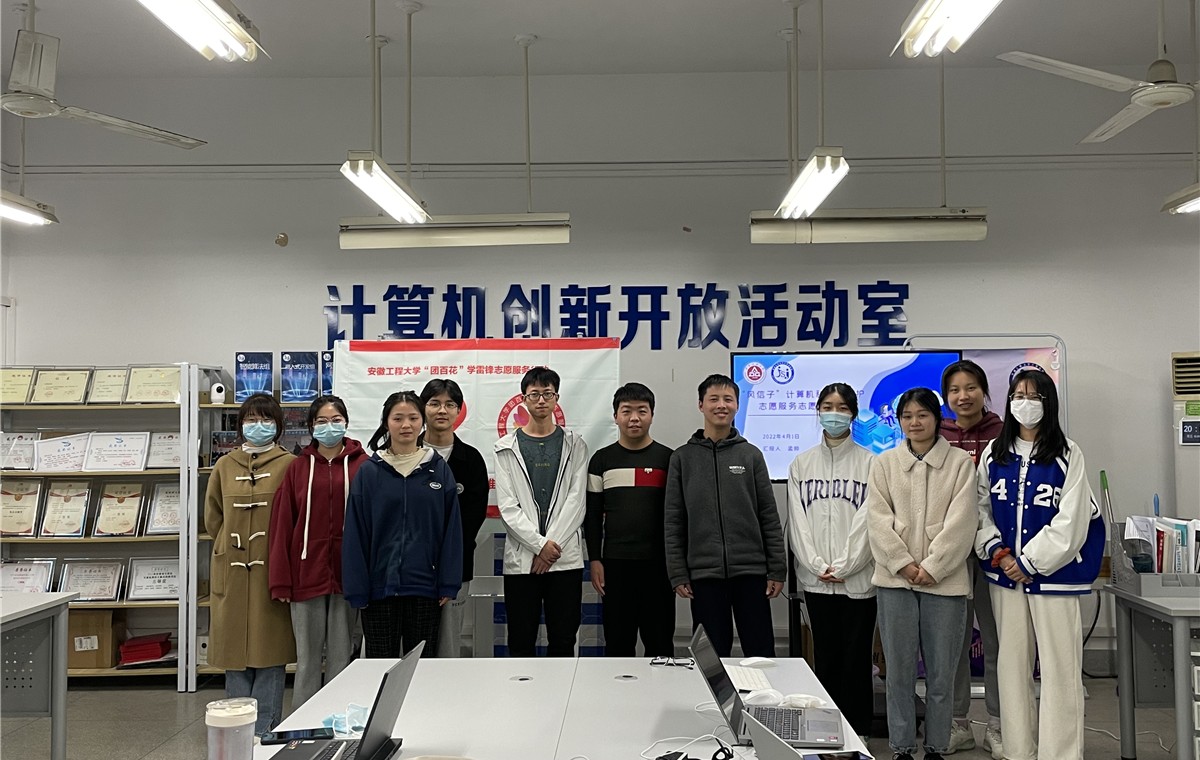
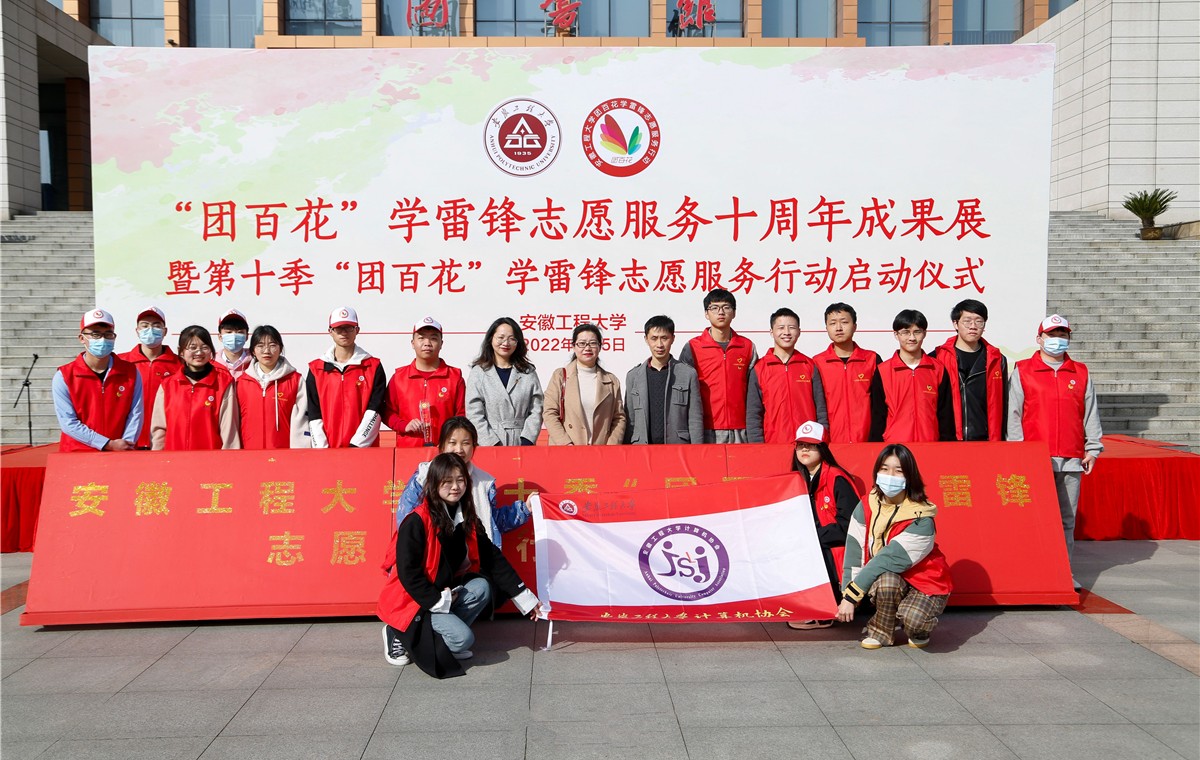
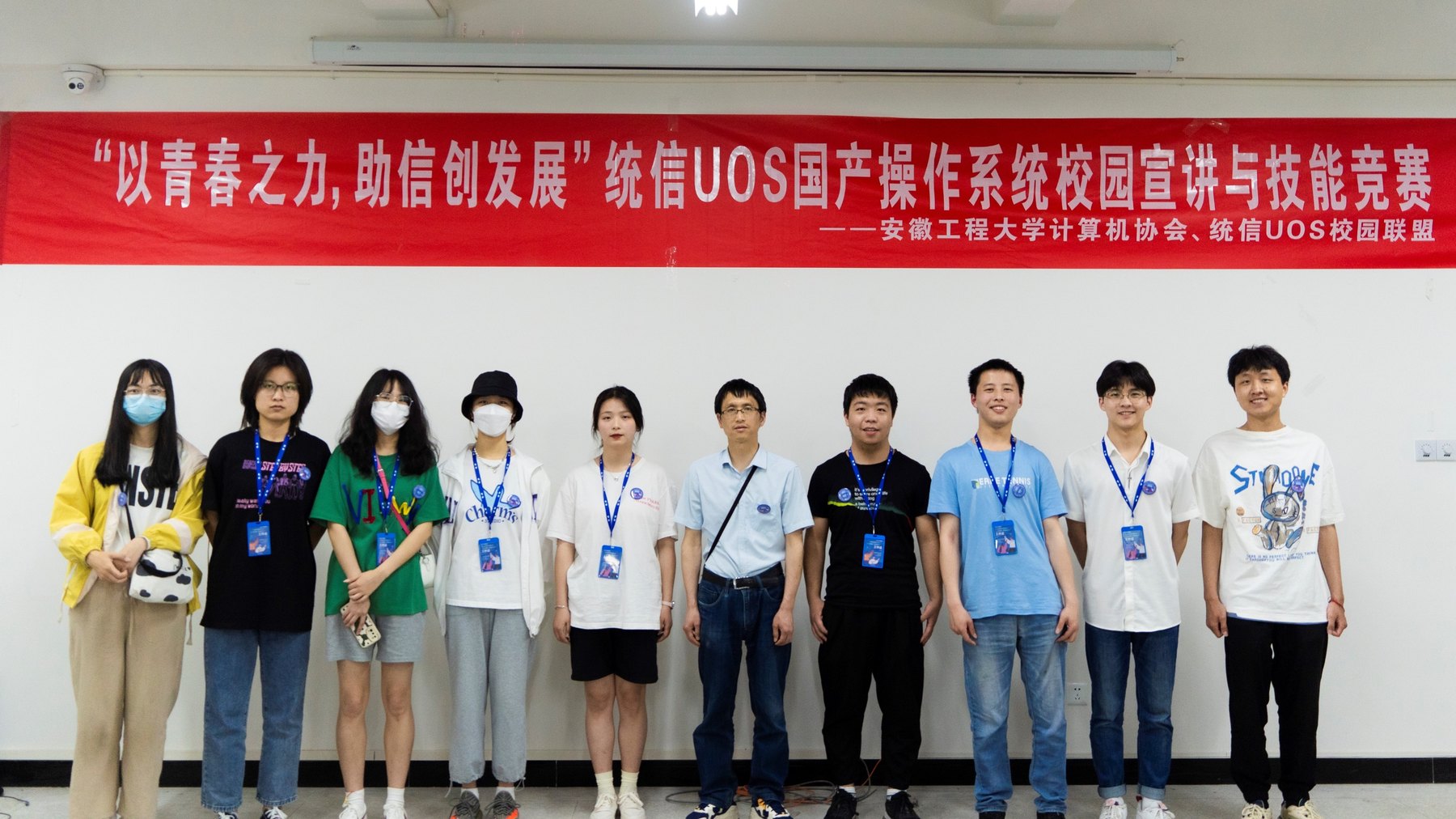
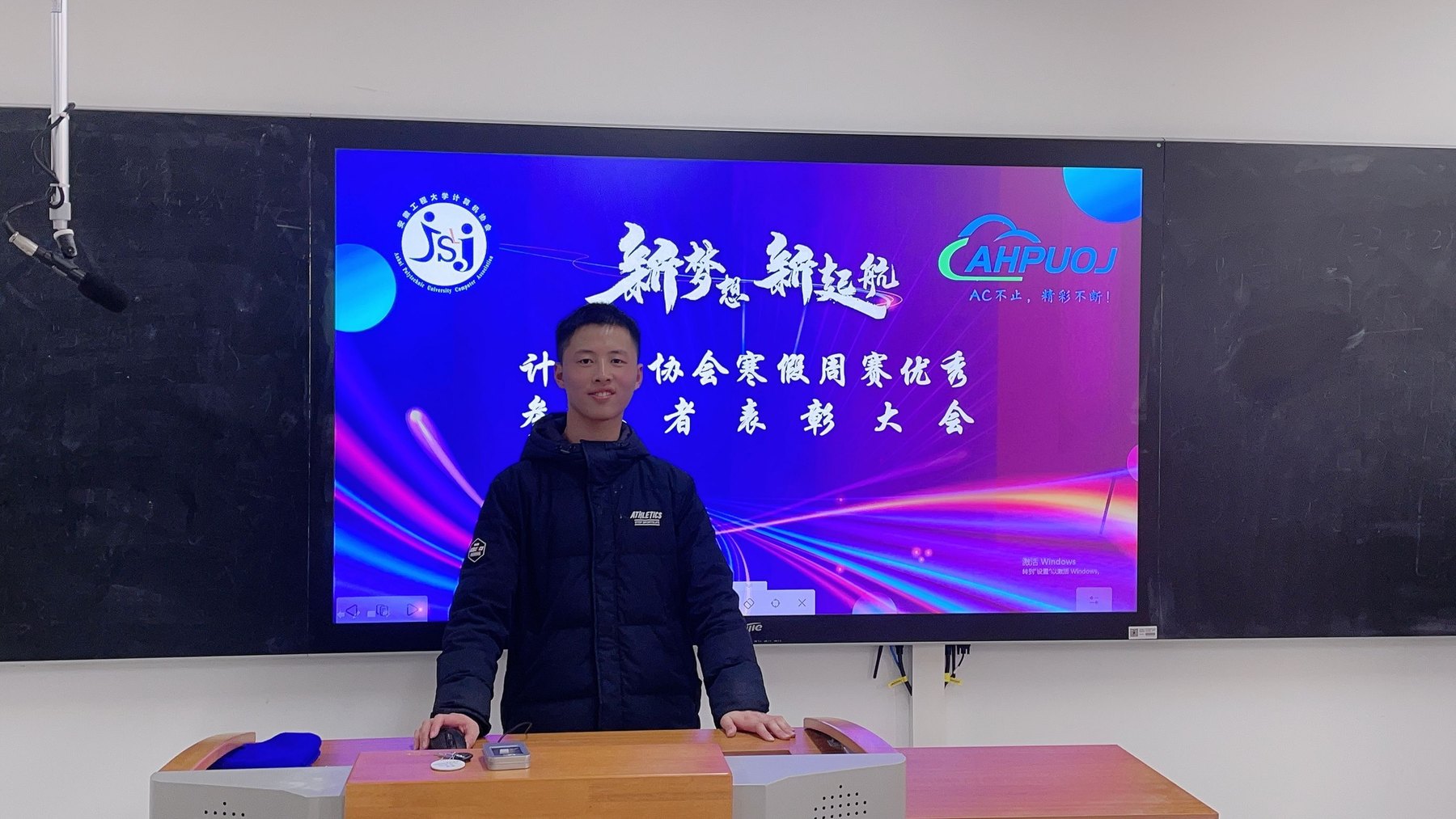
Selected organization, competition, and volunteer-service scenes that show sustained technical community work.
Undergraduate period
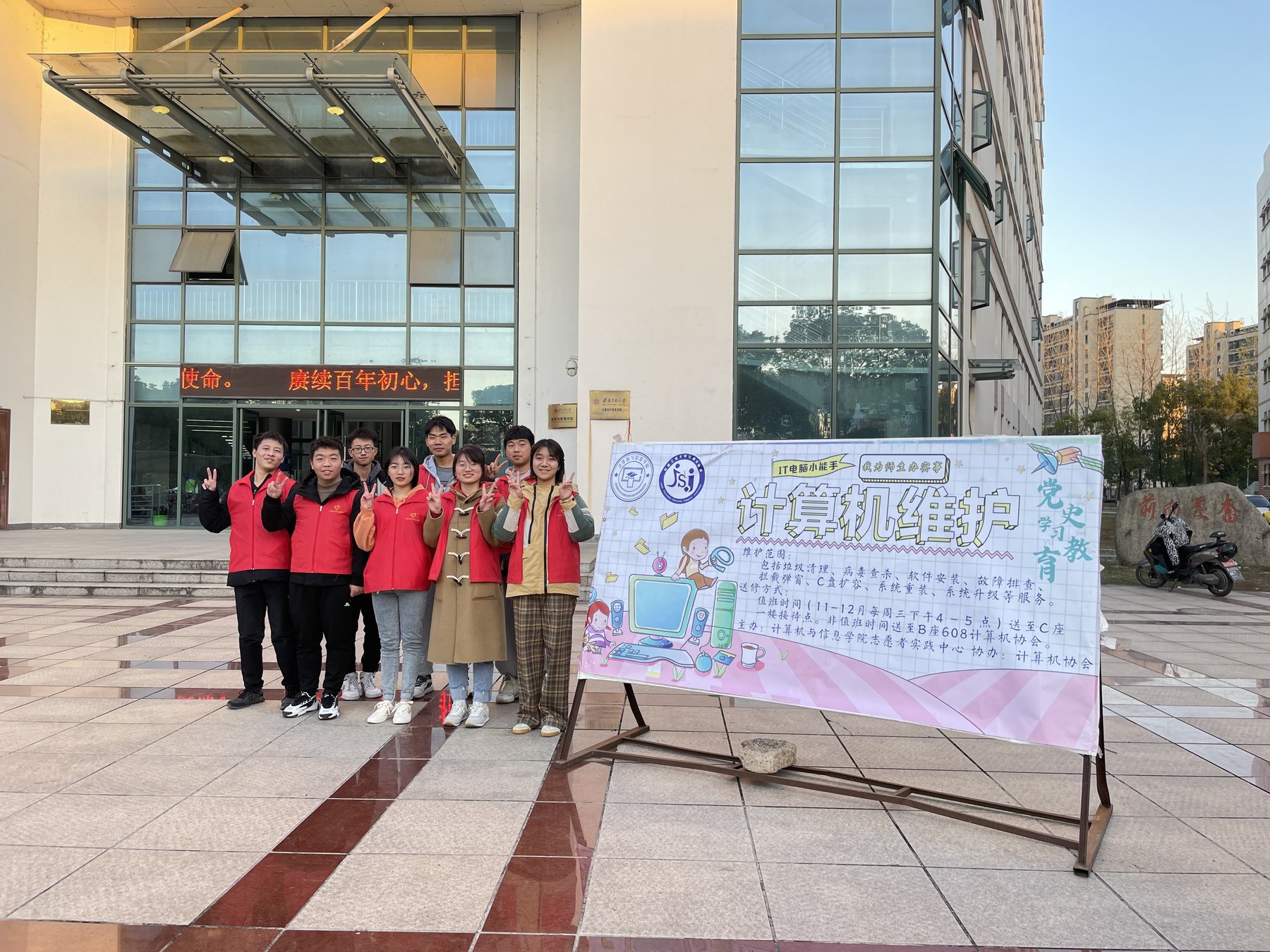
Organized programming lectures, freshman outreach, contest explanations, computer-maintenance volunteer services, and community technology activities.
Student service activities
Participated in and organized public-interest technology services that connected computing skills with campus and community needs.
Selected Honors
Representative awards are shown with selected public certificate previews.
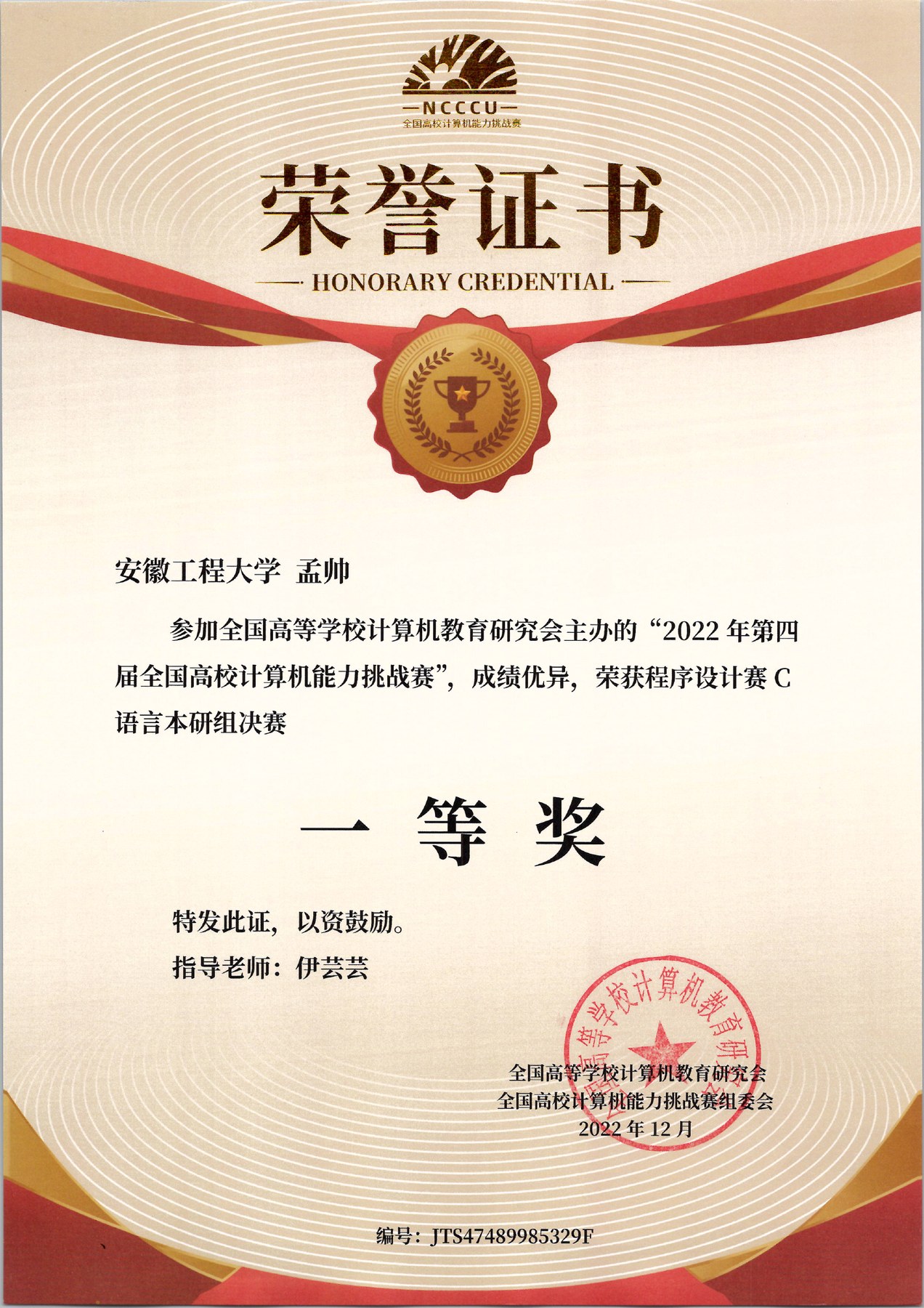
National First Prize, Computer Competency Challenge - C Programming 2022
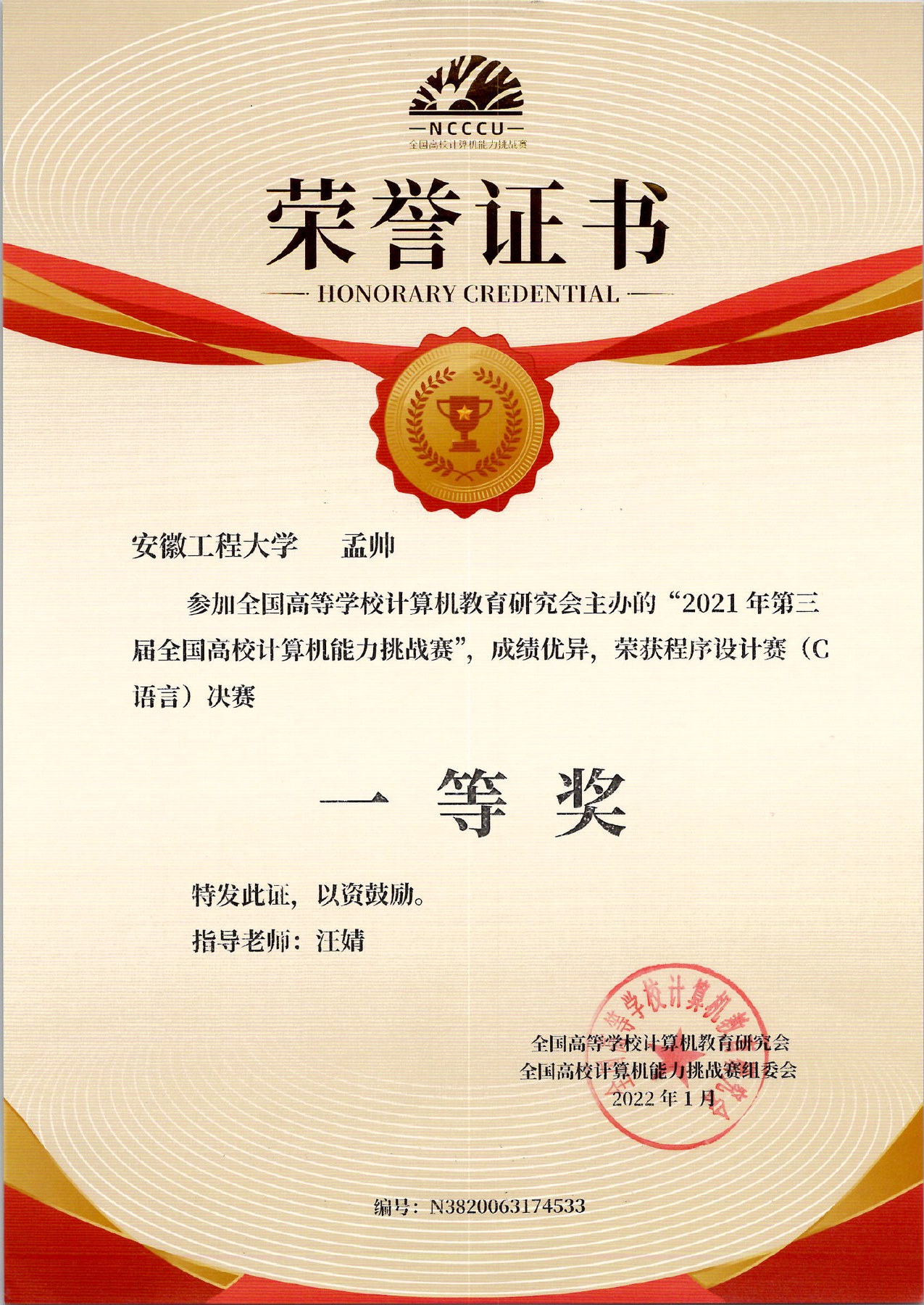
National First Prize, Computer Competency Challenge - C Programming 2021
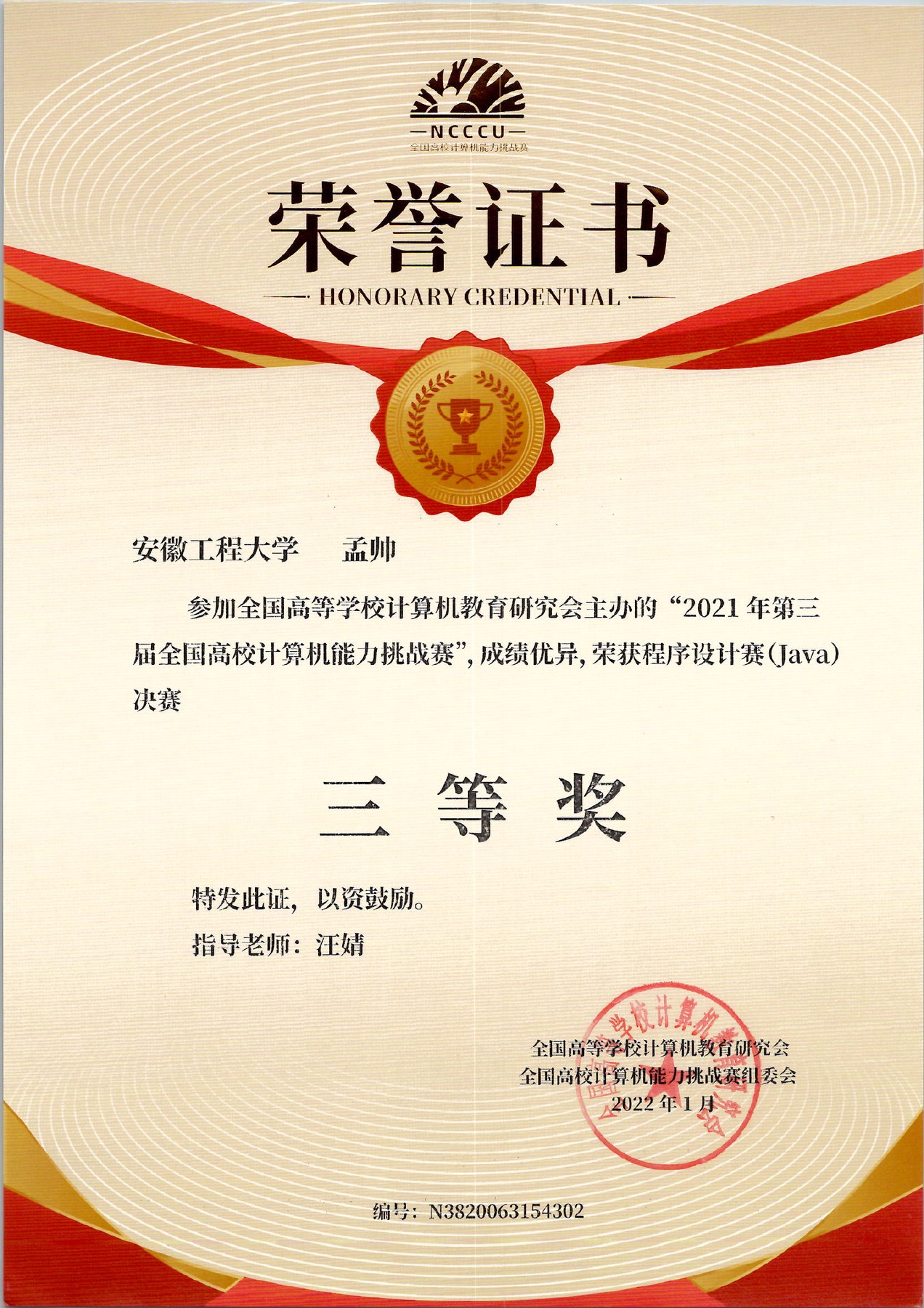
National Third Prize, Computer Competency Challenge - Java Programming 2021
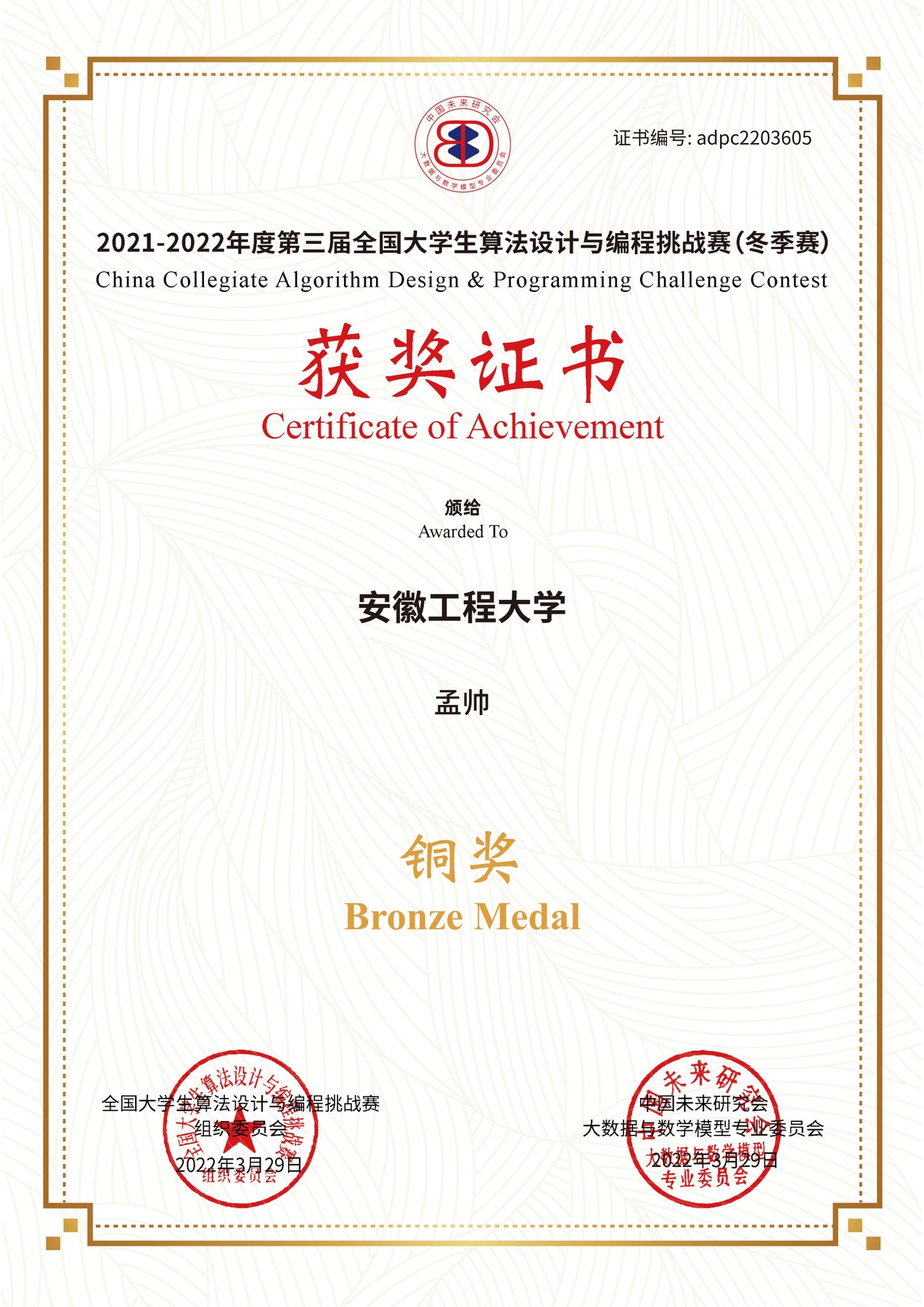
National College Student Algorithm Design Challenge Winter
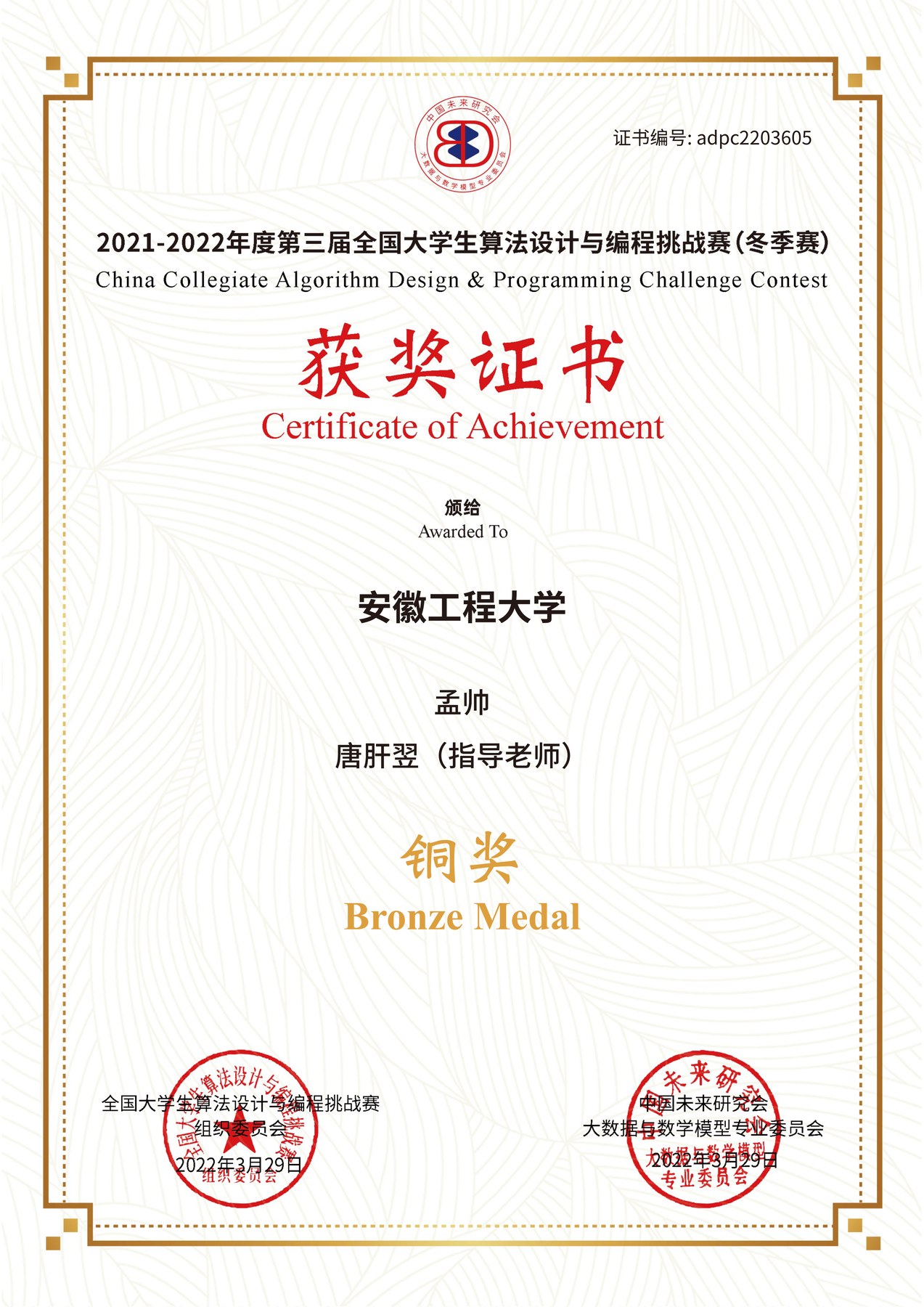
Advisor Certificate, National College Student Algorithm Design Challenge
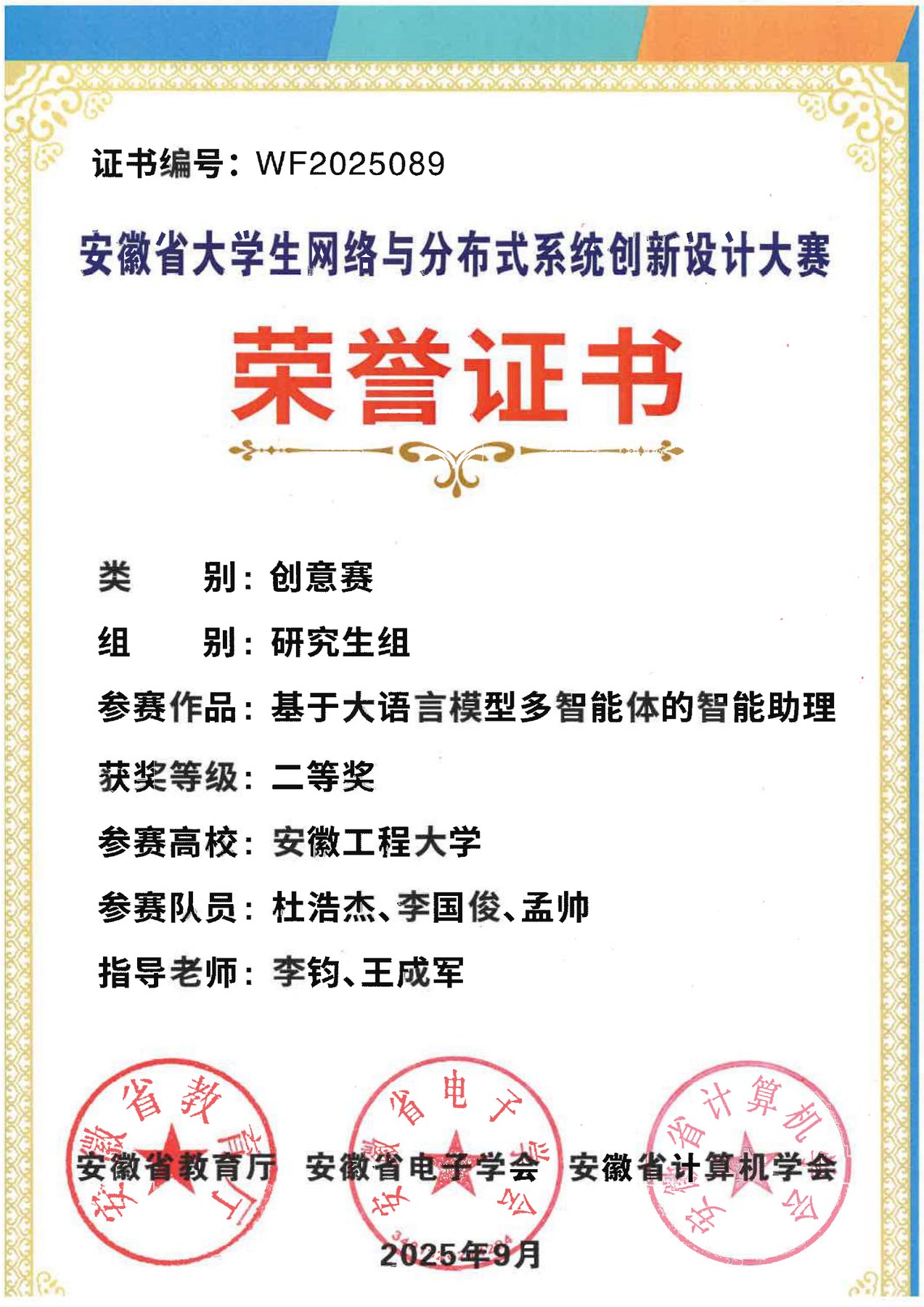
Second Prize, Anhui College Student Network and Distributed System Innovation Design Competition 2025
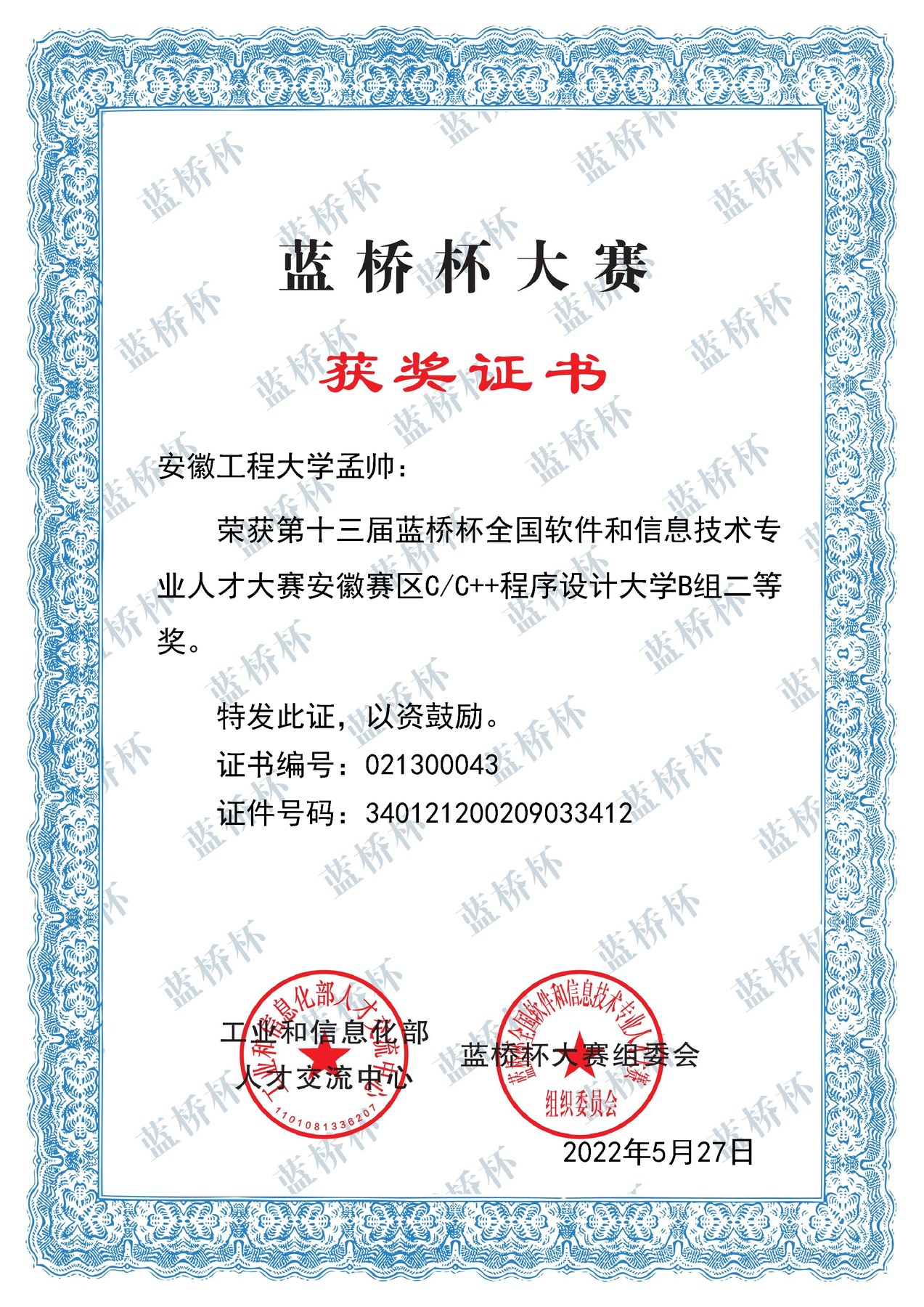
Second Prize, Lanqiao Cup Anhui Provincial Contest
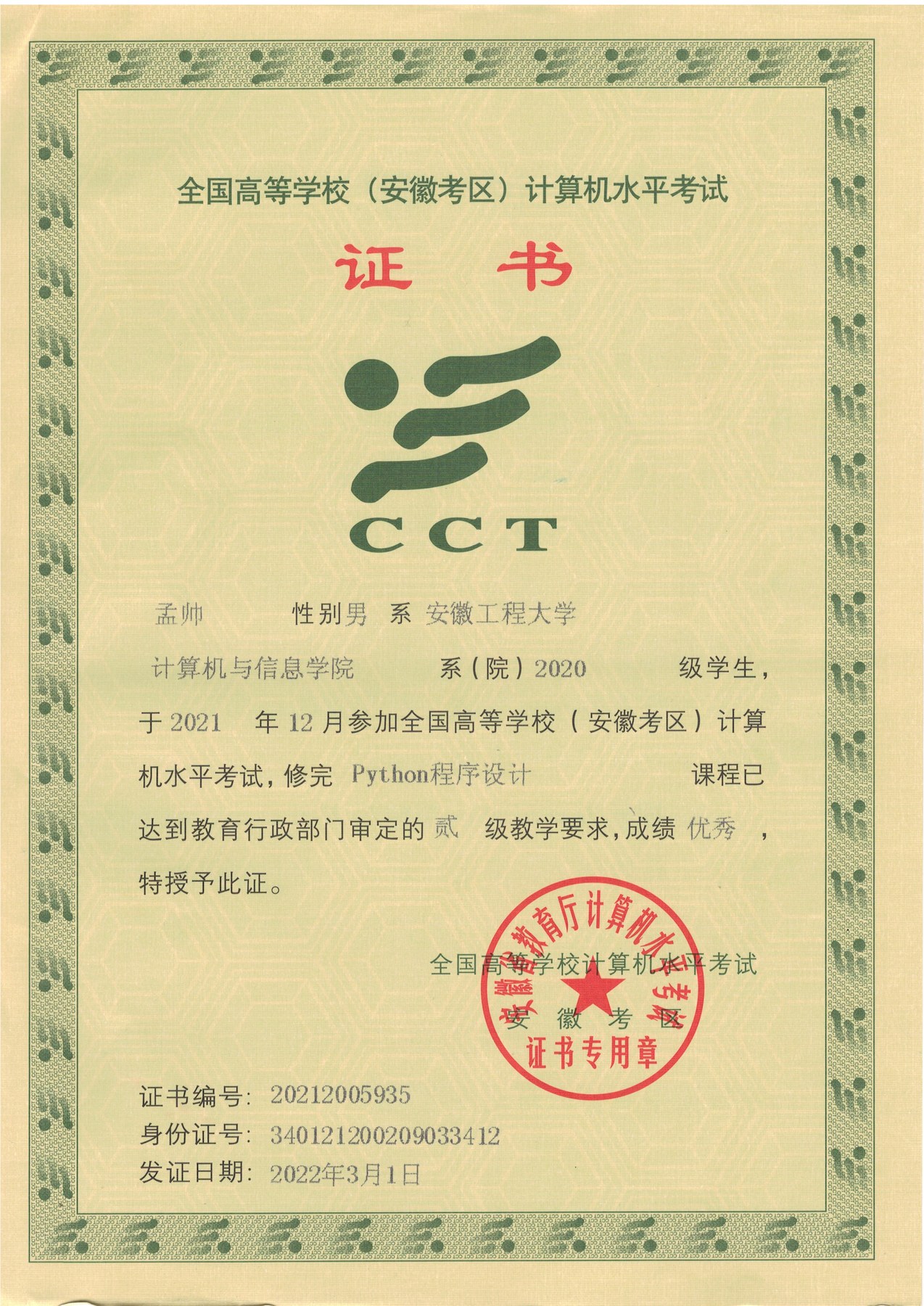
Provincial Second Prize, Python Programming
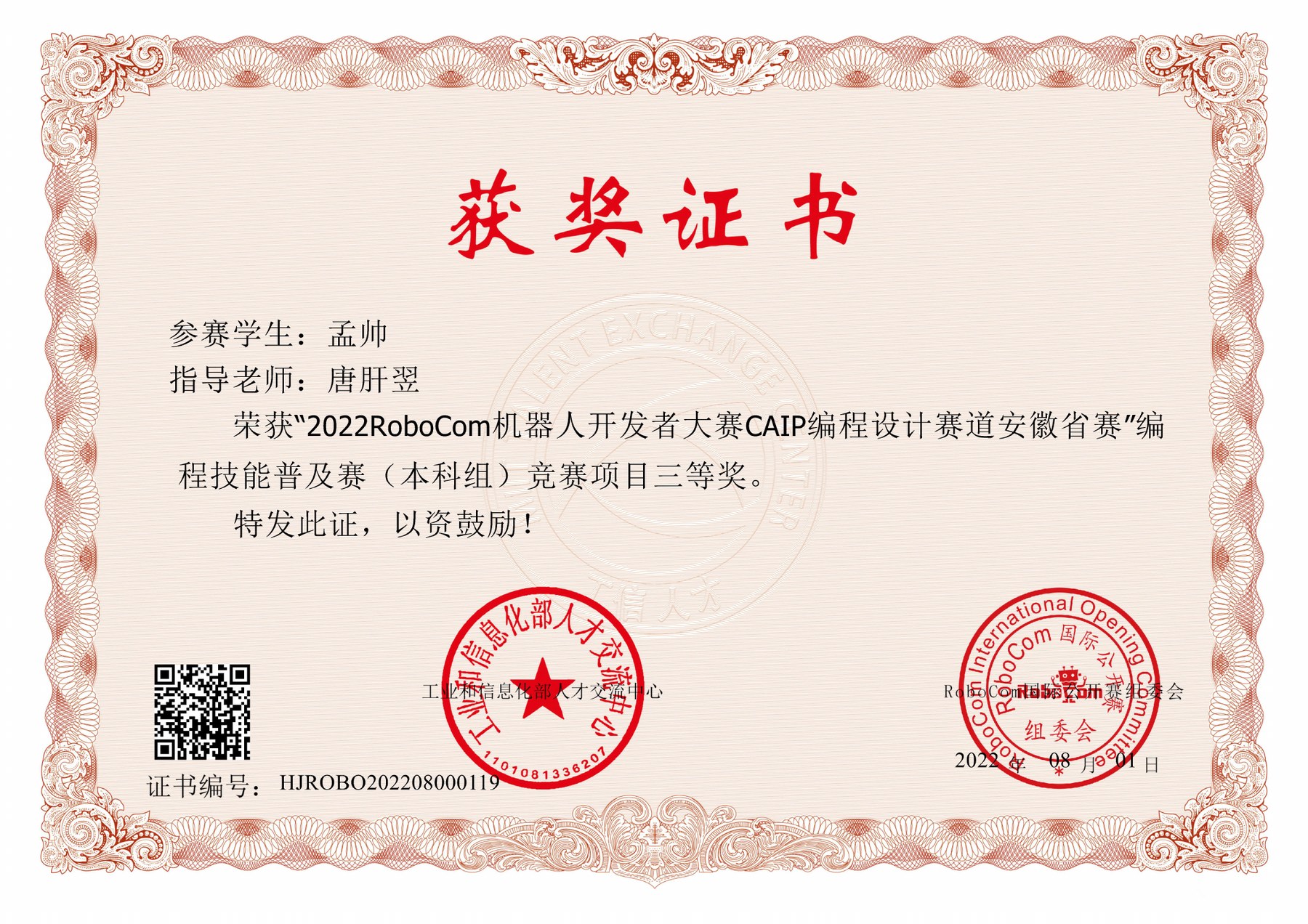
Provincial Third Prize, RoboCom Competition
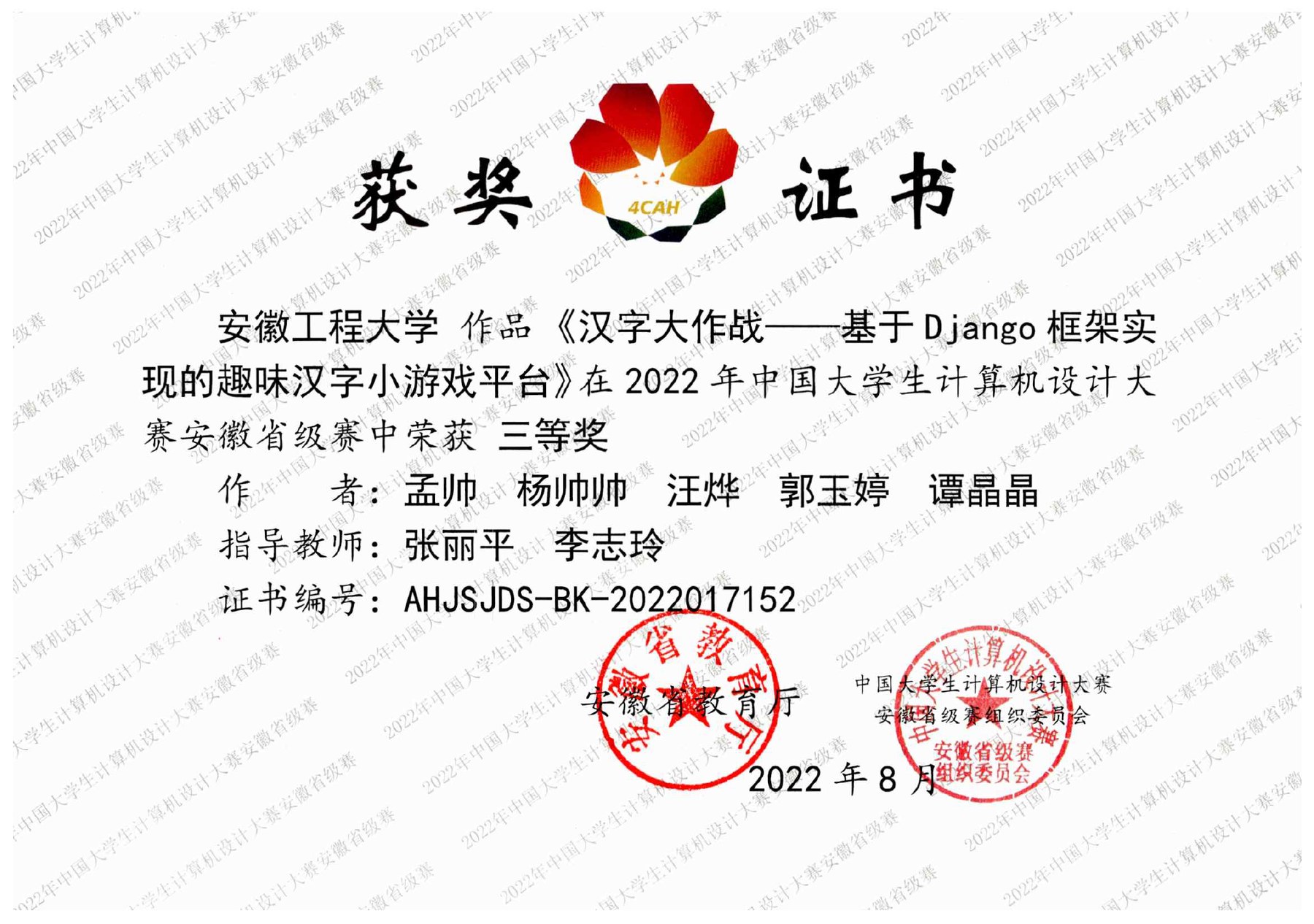
Anhui Provincial Third Prize, Design Competition 2022
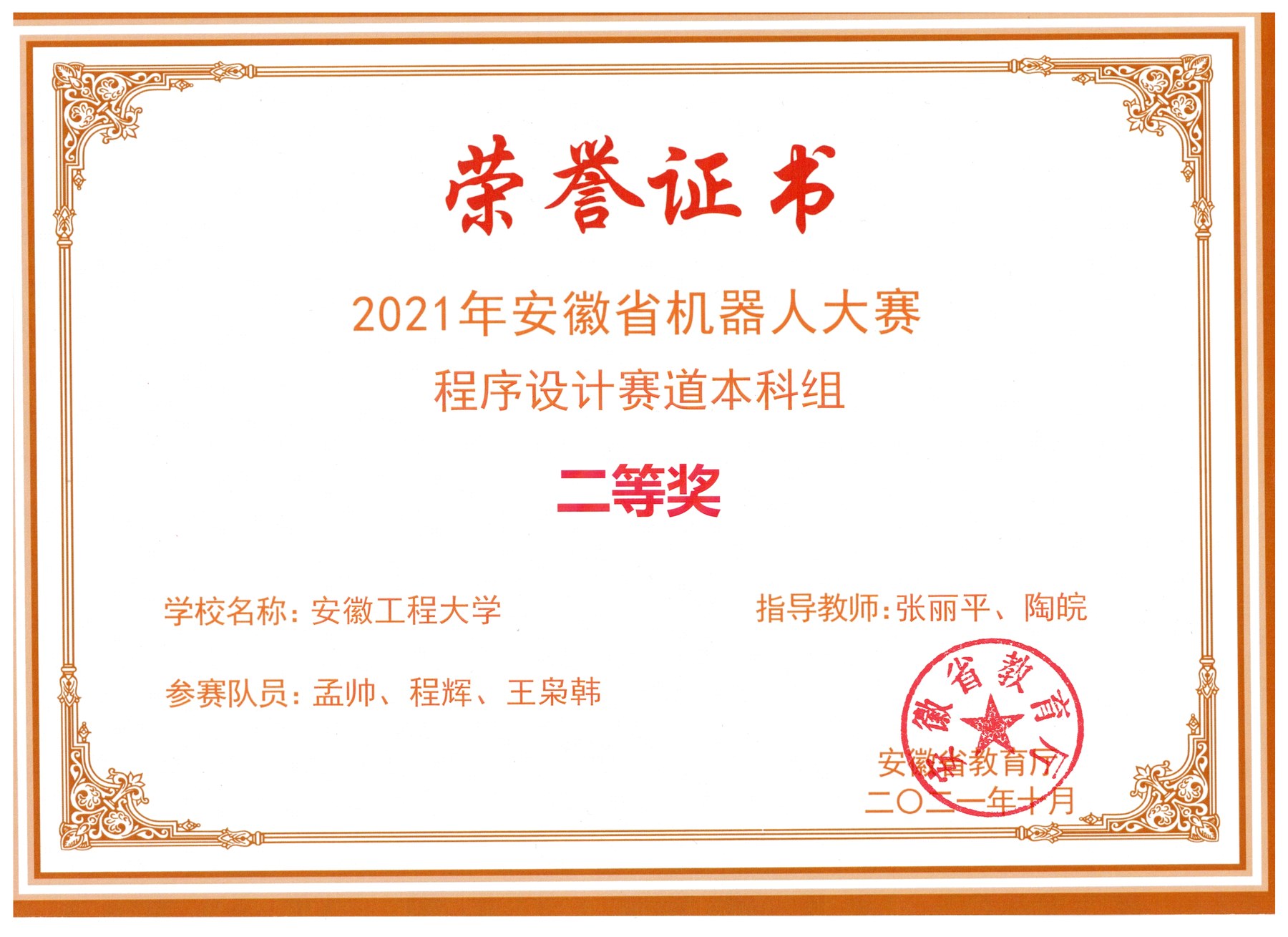
Anhui Provincial Programming Contest 2021
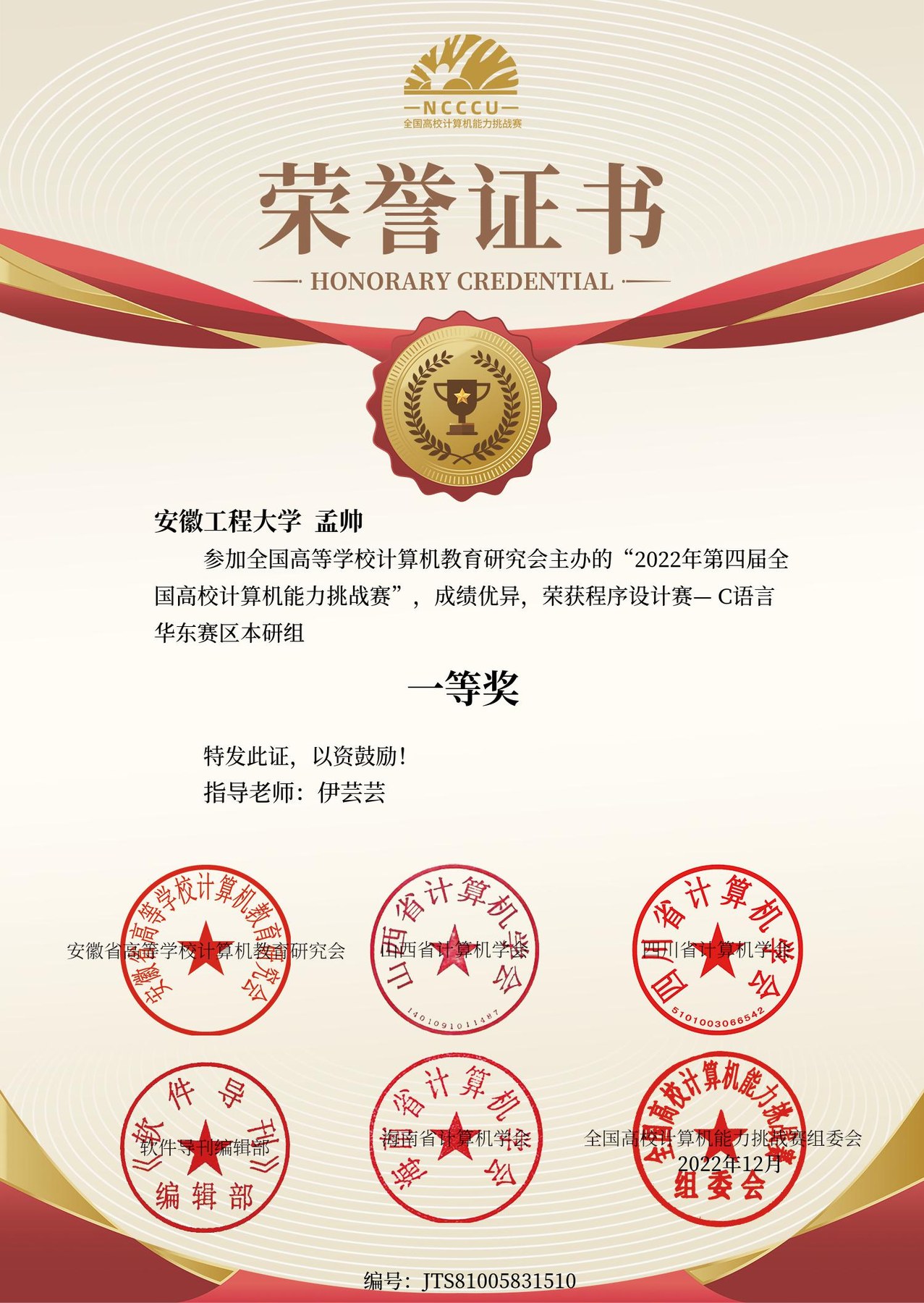
East China Regional First Prize, Computer Competency Challenge - C Programming 2022
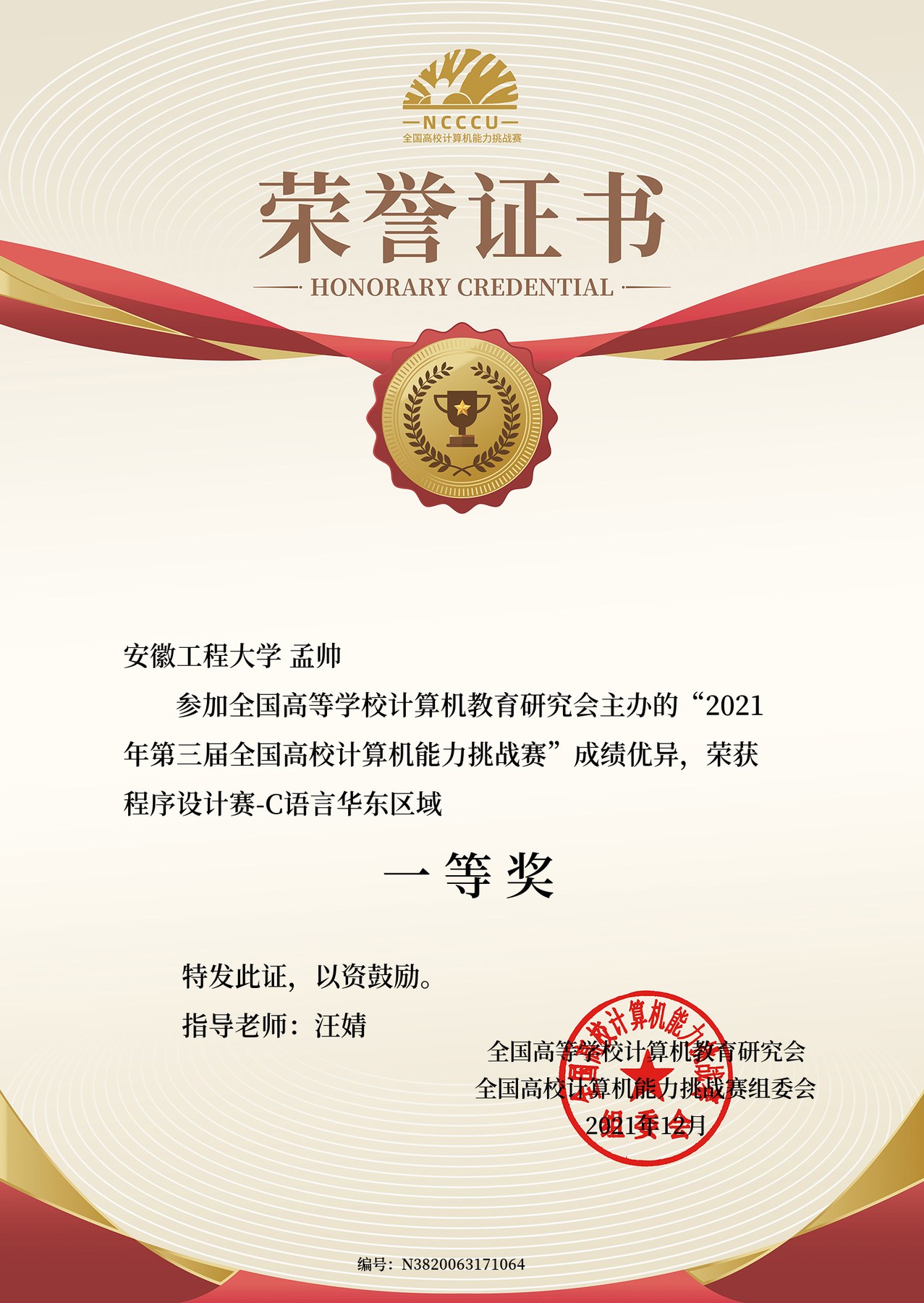
Regional Award, Computer Competency Challenge - C Programming 2021
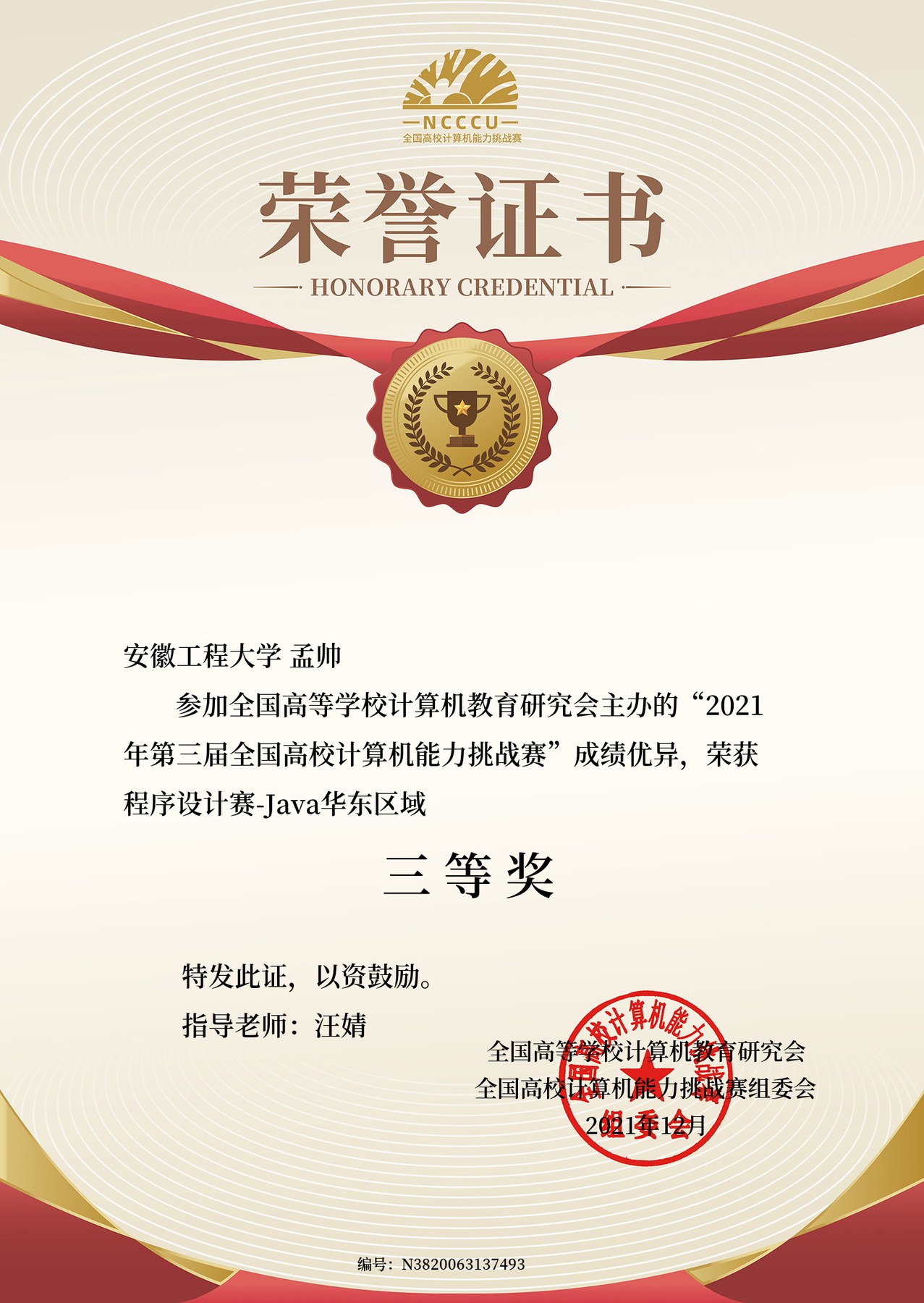
Regional Award, Computer Competency Challenge - Java Programming 2021
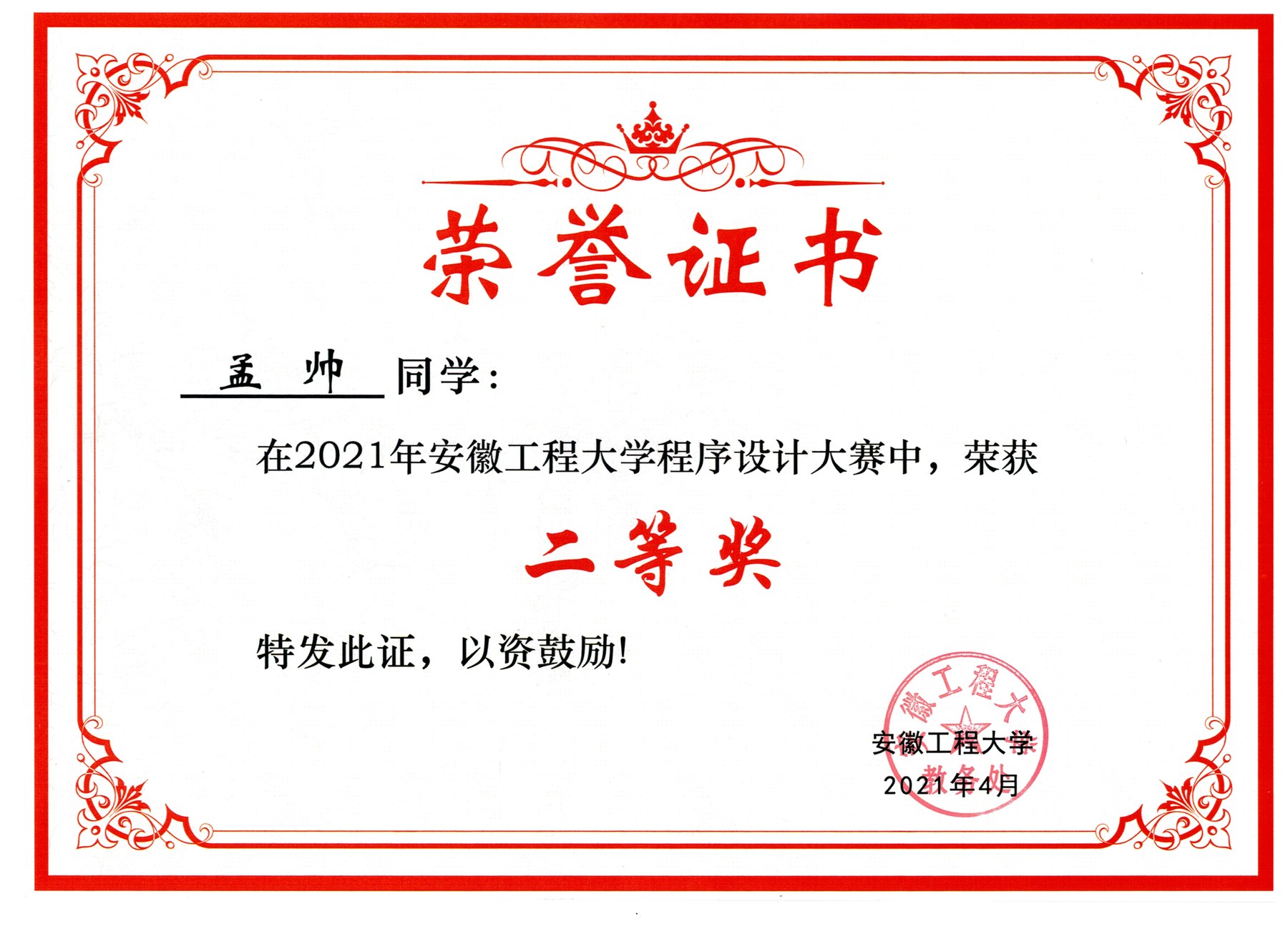
Anhui Polytechnic University Programming Contest
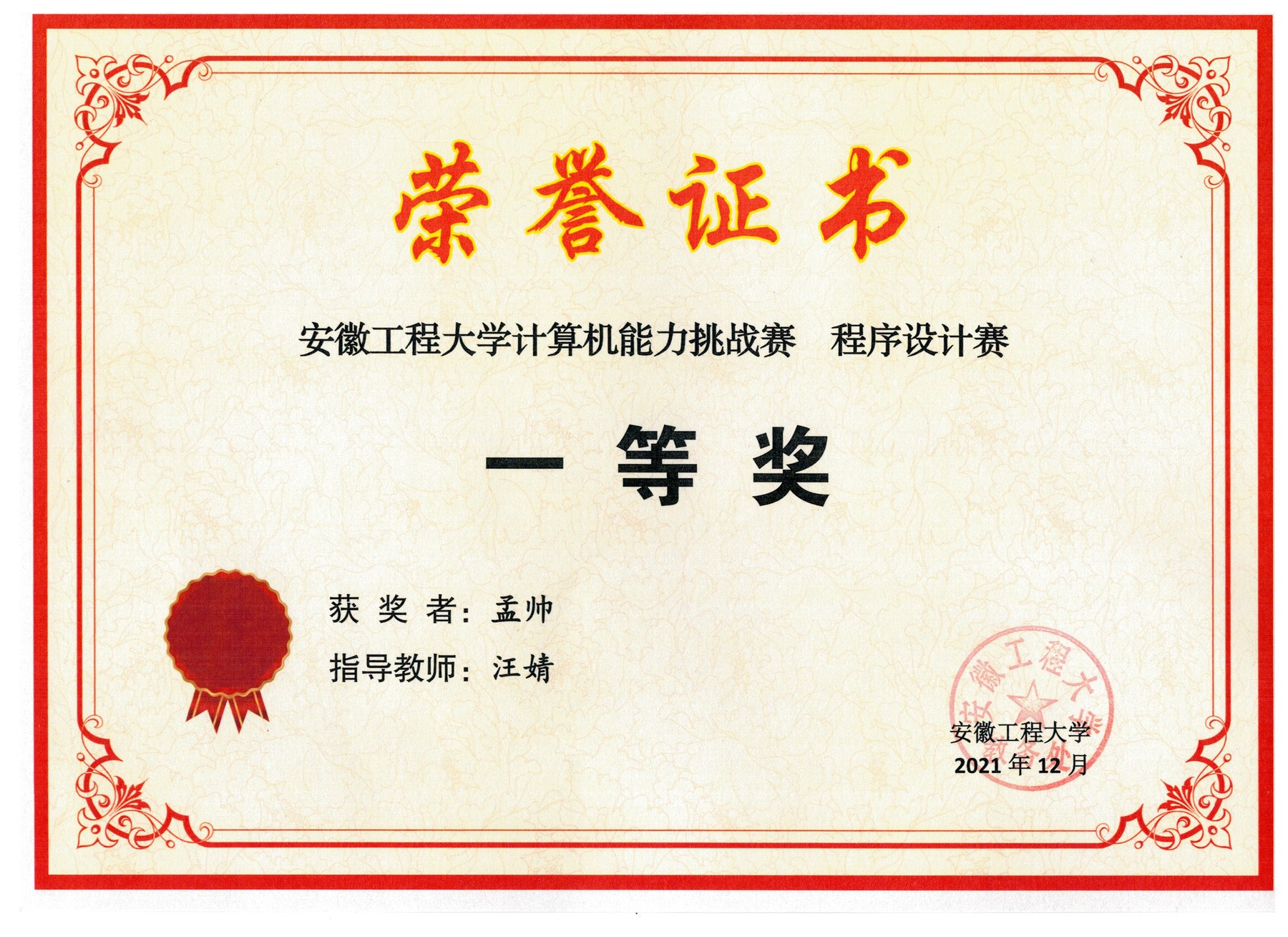
Campus Computer Competency Challenge

Graduation Design Certificate
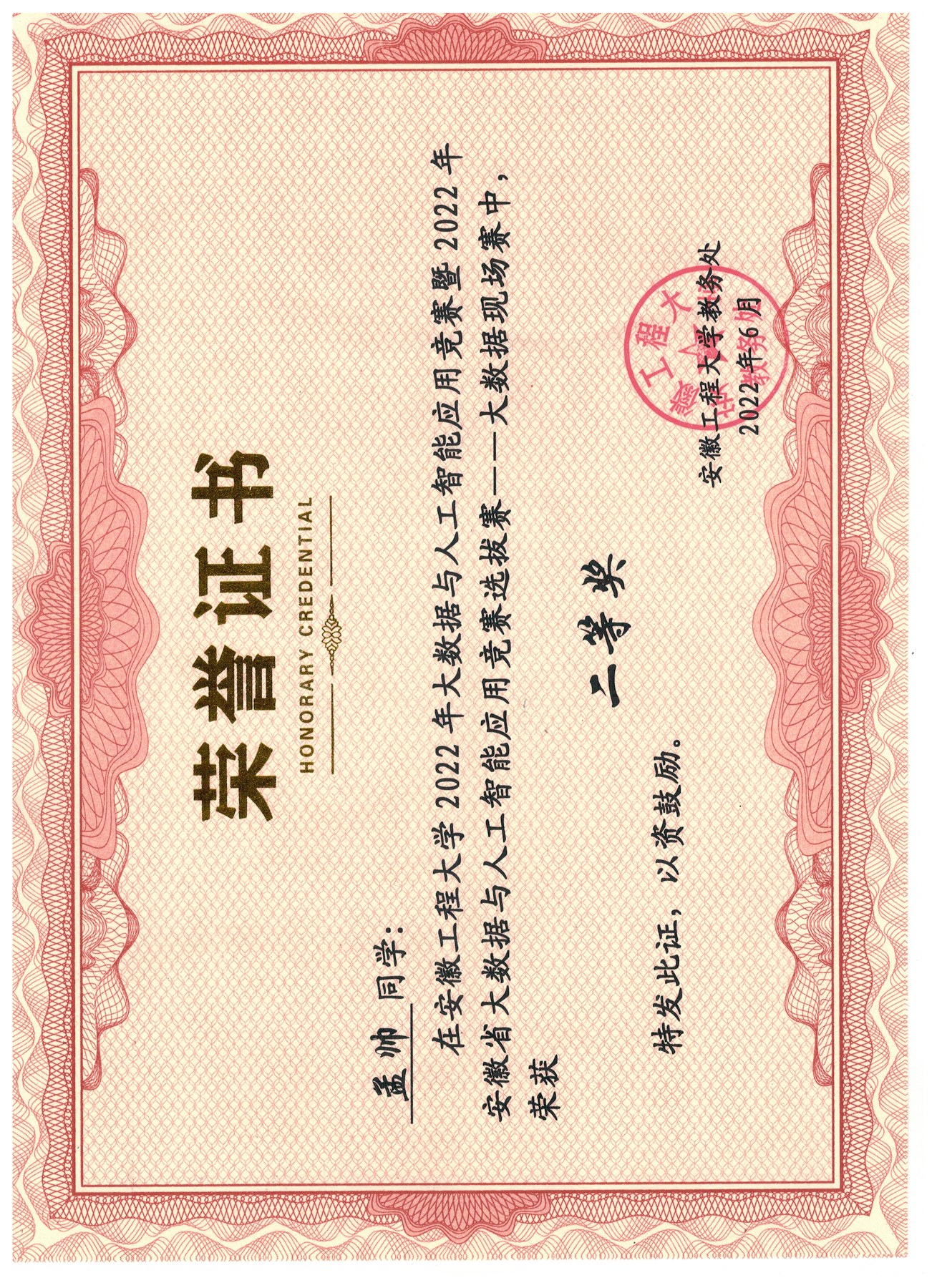
Campus Second Prize, Big Data On-site Competition
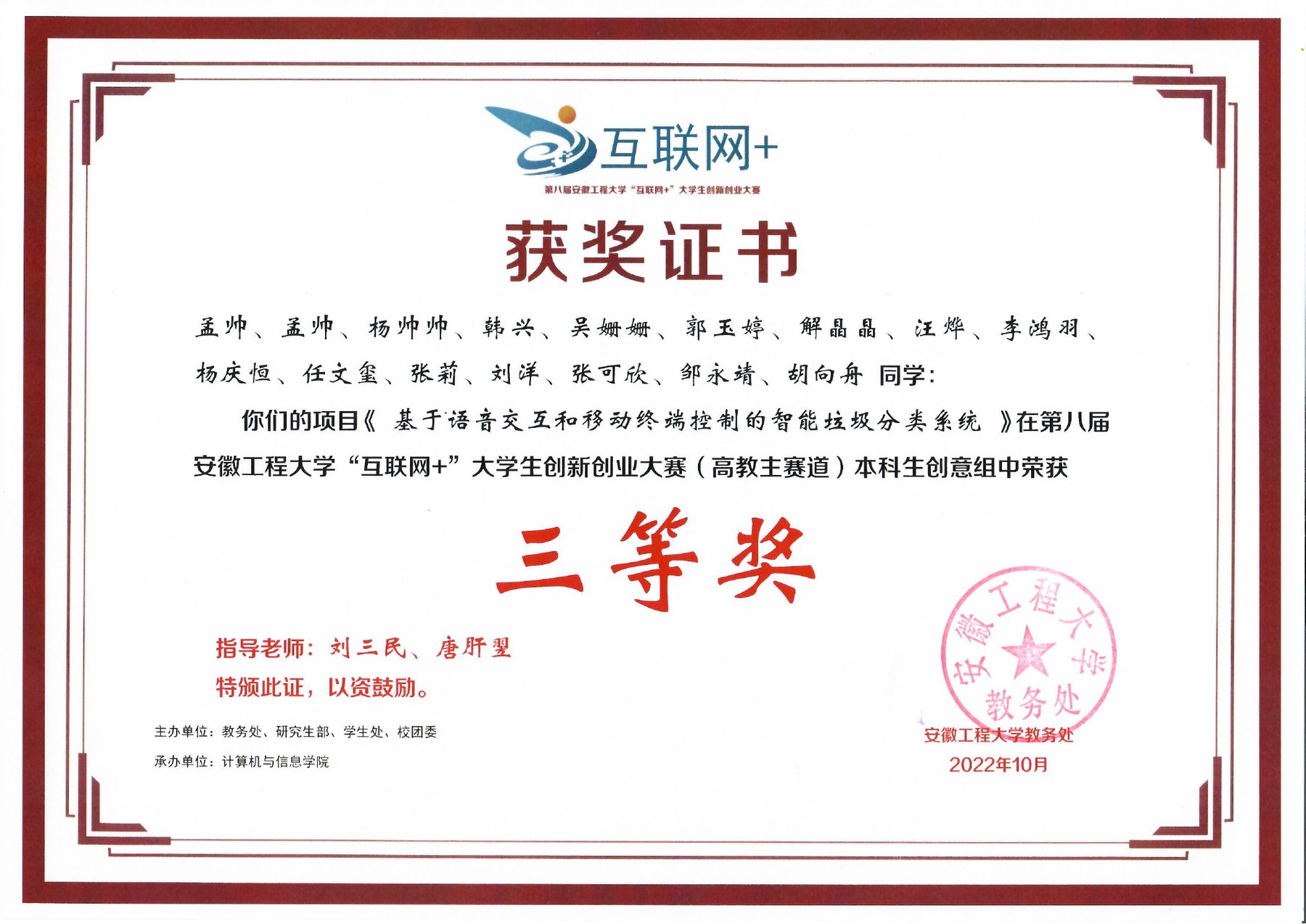
Campus Third Prize, Internet Plus Competition
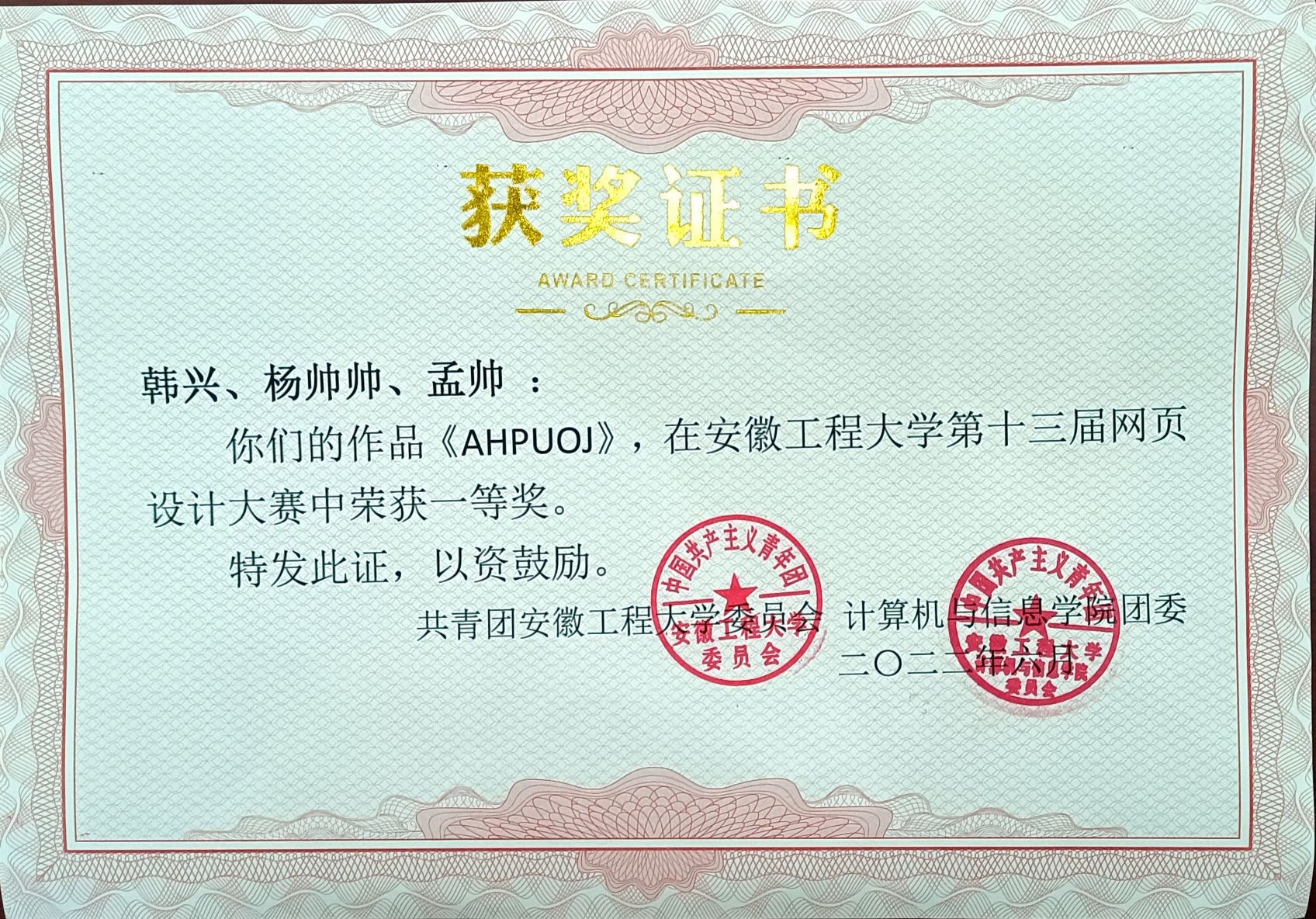
Web Design Competition - OJ Project
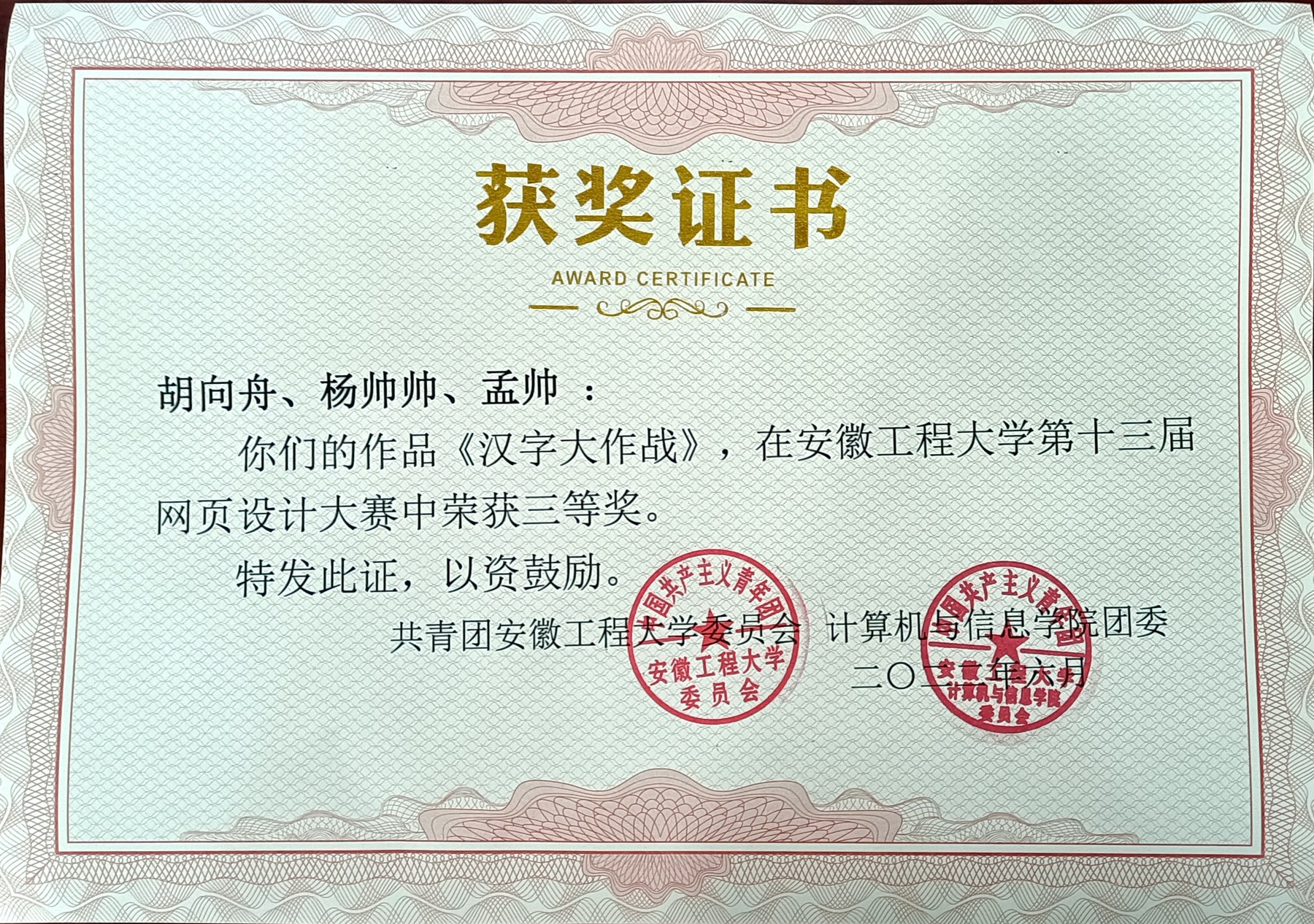
Web Design Competition - Chinese Character Battle
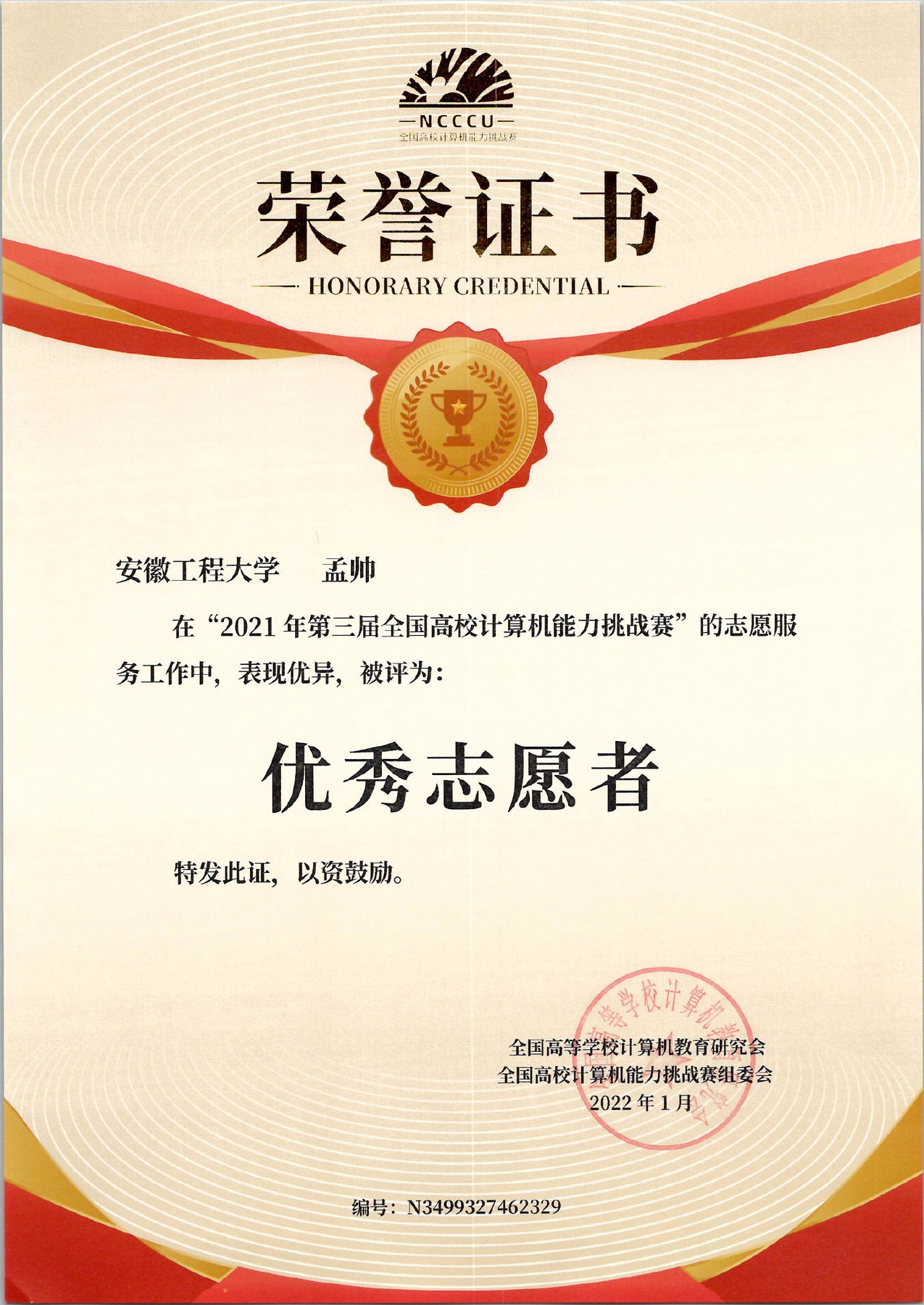
Outstanding Volunteer, Computer Competency Challenge 2021
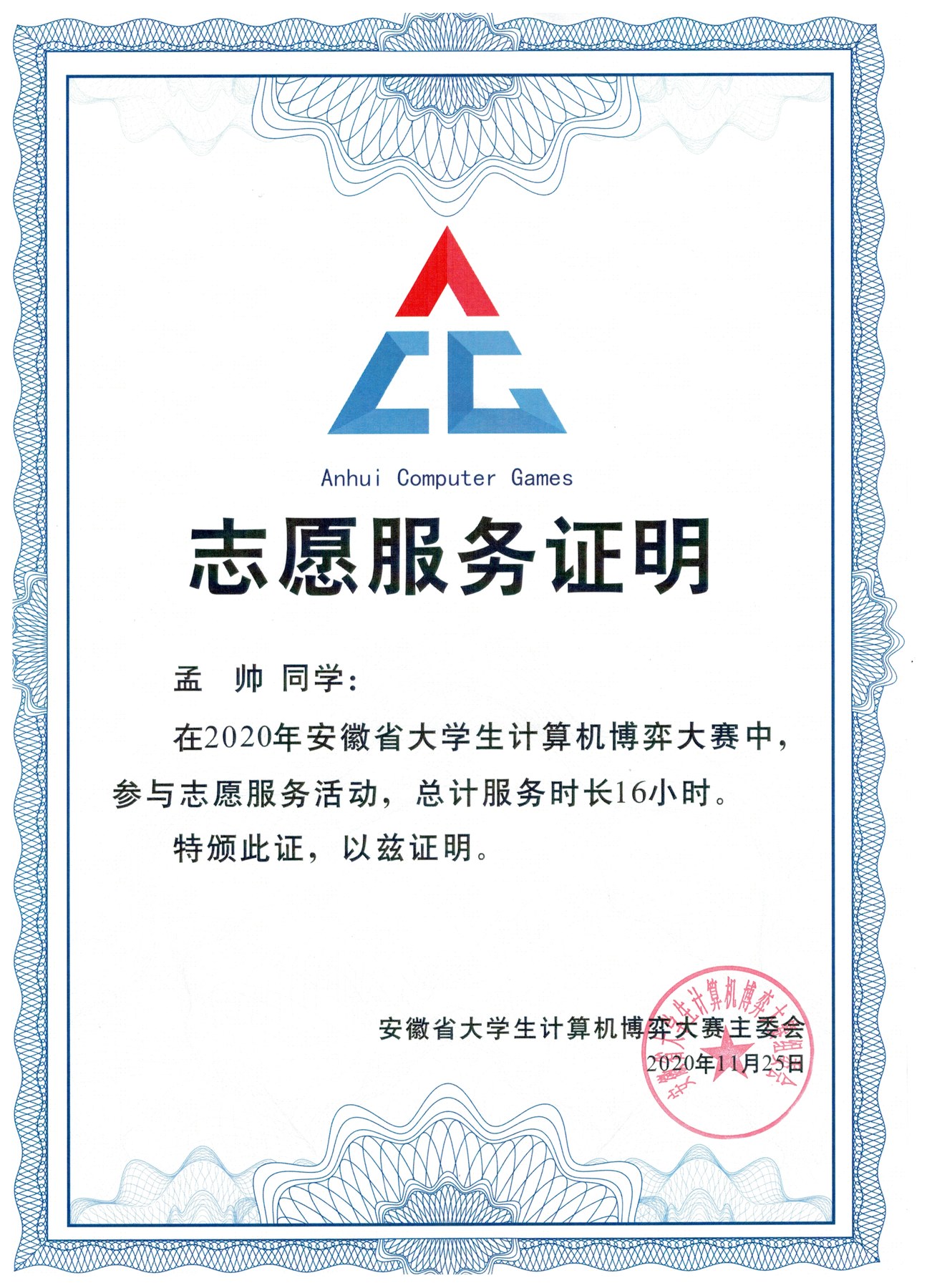
Volunteer Certificate, Computer Game Competition
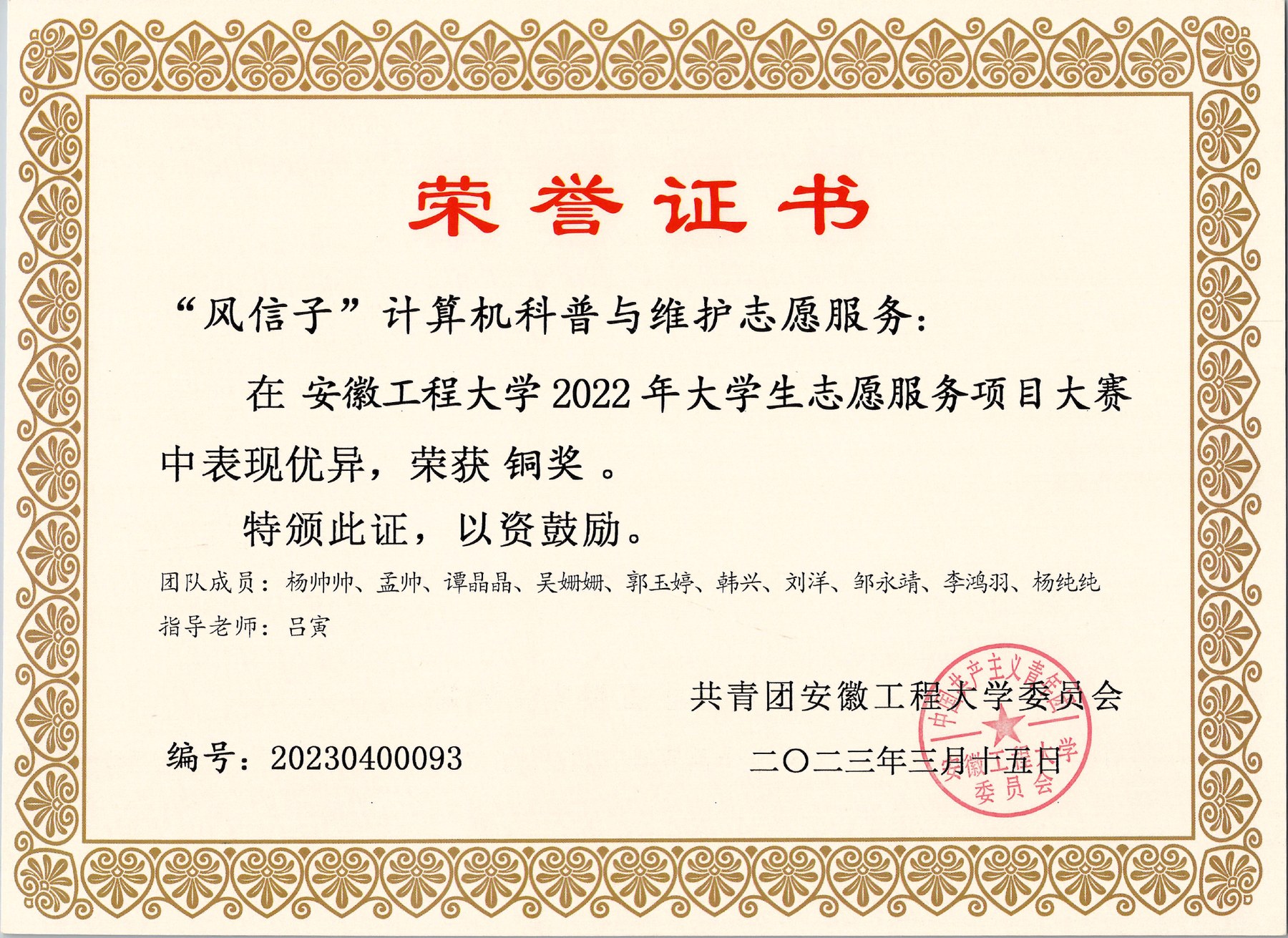
Bronze Award, University Youth Volunteer Service Competition